Core ideaThe voice we repeatedly obey does more than influence us; repeated obedience gives it authority. What first appears to serve the self can eventually become the master the self serves.
“If you do what is right, will you not be accepted? But if you refuse to do what is right, sin is crouching at your door; it desires you, but you must master it.” —Genesis 4:7
We are never truly our own masters.
Two voices contend for our obedience. God calls us to do what is right. The flesh urges us to preserve the self—its pride, desire, anger, fear, and right to rule.
The voice we obey determines the master we serve.
Sin Seeks Mastery
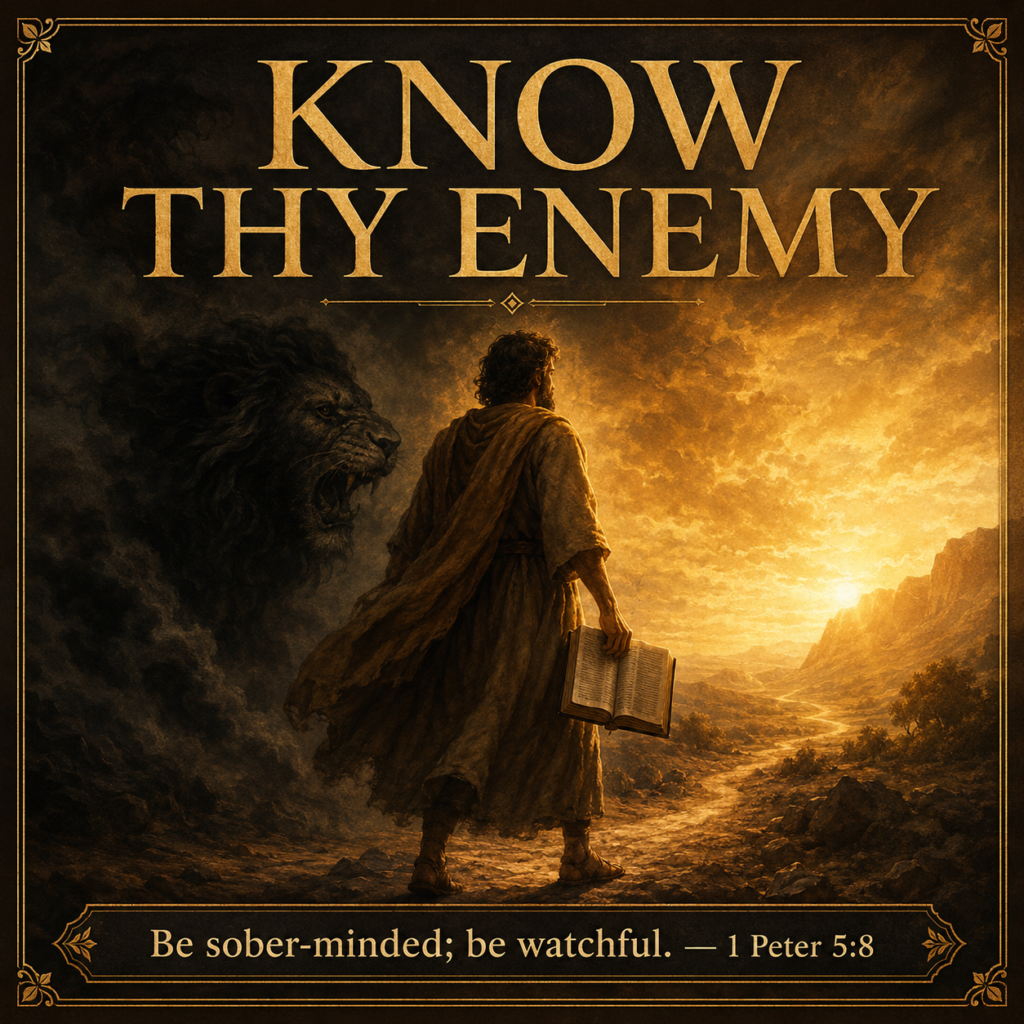
God warned Cain before he murdered Abel. Sin was crouching at his door. It desired him, but it had not yet mastered him.
Cain still had a choice.
He could humble himself and obey God, or protect his wounded pride and obey the flesh.
Sin is not presented merely as an act.
It is a power seeking mastery.
It crouches like a predator at the door. It waits to be admitted. It desires Cain—not merely to tempt him, but to rule him.
Before Cain killed Abel, sin was already contending for his obedience.
The murder would reveal which voice had become his master.
God rejected Cain’s offering, but He did not reject Cain without hope. Cain could still do what was right.
Cain and the Self That Refuses to Bow
But to accept correction, Cain had to surrender the self that felt wronged.
The flesh would not bow.
It accused.
It justified.
It demanded relief.
Cain could silence the voice of sin only by refusing to obey it.
Instead, he silenced Abel.
Abel had said nothing against him. Yet his accepted offering testified that obedience to God was possible. His faith exposed what Cain refused to surrender.
Cain could not silence the truth Abel represented without humbling himself.
So he silenced the man who represented it.
He refused to put the fallen self to death.
Instead, he put the witness of obedience to death.
Cain silenced the man, but he could not silence the testimony.
Abel’s blood cried from the ground.
His faith still speaks.
The self that refuses to die will eventually demand that something else be sacrificed.
Different Voices, One Throne
Cain’s struggle was not unique.
The flesh speaks differently in each person.
In one, it speaks through fear.
In another, through pride.
In another, through desire, envy, anger, or the need for approval.
The voices sound different, but they defend the same throne:
the self.
God calls the self to die.
The flesh calls the self to survive.
Every act of disobedience begins when we believe that preserving ourselves is safer than obeying God.
Fear protects our security.
Pride protects our importance.
Greed protects our possessions.
Bitterness protects our wounds.
Desire protects our pleasure.
Different voices.
One master.
The Lie of Self-Preservation
The self that refuses to die will obey whatever promises to keep it alive.
Fear promises safety.
Pride promises dignity.
Greed promises security.
Bitterness promises protection from being wounded again.
Desire promises relief from emptiness.
Approval promises belonging.
Control promises freedom from uncertainty.
Each voice offers the self something it believes it cannot live without.
That is why temptation is persuasive.
Sin rarely says:
“Obey me, and I will destroy you.”
It says:
“Obey me, and I will save you.”
Save your reputation.
Save your comfort.
Save your position.
Save your pleasure.
Save yourself.
But every promise of preservation demands obedience. And every act of obedience gives the voice greater authority.
The self begins by using sin to preserve itself.
It ends by serving the sin it once believed it could use.
What promises to keep the self alive eventually becomes the master that prevents it from living.
Saul: When Another Voice Becomes King
Cain shows how sin seeks mastery.
Saul shows what happens when it gains it.
God commanded Saul to destroy everything. Saul obeyed—but only as far as obedience did not threaten what he wished to preserve.
He spared what appeared valuable.
Then, when Samuel confronted him, Saul defended his disobedience as worship.
“I feared the people and obeyed their voice,” he finally admitted.
Saul was king over Israel.
Yet Israel’s voice had become king over Saul.
He feared losing the people more than he feared disobeying God. He protected their approval, his reputation, and his throne.
Even after Samuel pronounced judgment, Saul’s first concern was not restored obedience.
He pleaded:
“Please honour me before the elders of my people.”
Saul had lost the kingdom, but he was still trying to preserve the appearance of being king.
The self that refuses to die does not merely disobey once.
It keeps obeying whatever promises to preserve it.
The Cross and the Voice of Self-Preservation
Jesus exposed this deception:
“For whoever wants to save his life will lose it, but whoever loses his life for My sake will find it.”
The flesh says:
“Save yourself.”
God says:
“Surrender yourself.”
One voice promises life through self-preservation.
The other leads through self-denial into life.
At the cross, the voice of the flesh was heard again:
“Save Yourself.”
But Christ did not obey it.
Cain felt wronged and protected himself.
Christ was wronged and gave Himself.
Cain obeyed anger.
Saul obeyed the people.
Christ obeyed the Father.
Cain preserved himself and took another life.
Saul preserved his position and lost his kingdom.
Christ gave Himself and became life for many.
He became obedient unto death.
Christ did not lose His life as Cain lost his.
He surrendered it to the Father.
And what He surrendered was not destroyed.
He received it back in resurrection.
He laid down one life and became the source of life for many.
Nothing surrendered to God is finally lost.
Only what we refuse to surrender can become our master.
Every Voice Seeks Our Obedience
Every voice seeks our obedience.
The voice of the flesh says:
“Save yourself.”
The voice of God says:
“Surrender yourself.”
One promises life but leads to slavery.
The other leads through death into life.
The same struggle remains within us.
Fear speaks.
Pride speaks.
Desire speaks.
The wounded self speaks.
But none of these voices can rule us without our obedience.
Sin may crouch at the door.
It may desire us.
But the voice we obey determines the master we serve.
The self that refuses to die will obey whatever promises to keep it alive.
But the life surrendered to God is never finally lost.
The voice you obey becomes the master you serve.
Reflection Questions
- Which voice most often promises to protect the part of yourself you are afraid to surrender?
- Where has fear, pride, approval, desire, bitterness, or control begun to shape your obedience?
- What would refusing that voice and obeying God look like in one concrete decision?
- Are you using something to preserve yourself that may slowly be gaining mastery over you?
Related Ideas
The Voice We Obey — how repeated obedience gives a voice authority over the heart.
Surrender — why freedom begins when the self stops demanding preservation at any cost.
Related Reading
What Will You Do When God Asks for Your Isaac? — a deeper exploration of surrender, obedience, and the order of the heart.
Originally published on X on 2026-08-02. The website version preserves the original argument and voice while adding headings, metadata, connections, and reflection prompts.
- The Voice You Obey Becomes the Master You Serve
- The Voice That Shapes the Soul
- The Soul that can hear the Voice of Good and the Voice of Evil