Core ideaThe soul is shaped by the voice it repeatedly trusts and obeys. Hearing is not enough; spiritual maturity requires discernment, humility before correction, repentance after failure, and a willingness to let God's voice become greater than fear, desire, pride, shame or despair.
Jesus said, “My sheep hear My voice; I know them, and they follow Me.”
This is not a small statement. Jesus did not say merely that His sheep know His commandments, understand His teachings, or admire His words. He said they hear His voice. Then He gave the proof of true hearing: they follow.
A voice is not merely sound. A voice is a summon. It enters the soul, gives direction, and moves the body into obedience. Therefore, the question is not whether man is guided. The question is whose voice is guiding him.
Samuel: Hearing Before Understanding
Samuel shows this clearly.
Samuel was lying in the temple of the LORD, where the ark of God was located. Eli was nearby, lying in his room. When the LORD called Samuel, Samuel rose and ran to Eli, saying, “Here I am, for you called me.”
This detail matters. The voice was real enough to move him. Samuel did not receive a vague idea, a soft emotion, or a passing thought. He heard a call so tangible that his body obeyed before his understanding caught up.
Yet Eli did not hear it.
The distance was not the issue. If Samuel could hear what he thought was Eli’s voice, then Eli was close enough to hear an ordinary call from Samuel’s place. But God was not calling Eli. God was calling Samuel.
This means the Voice was not merely sound travelling through space. It was a revelation addressed to a soul.
At first, Samuel heard before he understood. He thought the voice belonged to Eli. Three times he ran to man before he learned to answer God. This is the condition of many souls. Voices move them before they can discern the source. They obey impulses, fears, desires, accusations, ambitions, and convictions without first asking: Who is speaking?
Samuel’s story teaches us that hearing is not enough. The soul must learn discernment.
When Eli realised that the LORD was calling the boy, he said, “Go and lie down, and if He calls you, say, ‘Speak, LORD, for Your servant is listening.'” Samuel returned to his place. Then the LORD came and stood there, calling as before, “Samuel! Samuel!”
Discernment Must Be Learned
This time, Samuel did not run to Eli. He answered the Voice.
That moment changed his life.
Samuel was trained in the priesthood, but the Voice shaped him into a prophet. He served under Eli, but he became the mouth of God to Israel. He slept near the ark, but his destiny awakened when he answered the Voice.
The moral is clear: when man listens to the Voice of God, he becomes more than his environment could produce. Samuel was raised near the priesthood, but shaped by the Voice into prophecy.
Solomon reveals the opposite tragedy.
Solomon began with everything Samuel lacked. He had the throne, the inheritance, the wisdom, the wealth, the honour, the power, and the peace of a kingdom. God appeared to him. God gave him wisdom beyond all men. Solomon built the temple. He stood at the centre of glory.
Solomon: Wisdom Without Obedience
Yet the man who had wisdom lost the wisdom to obey.
Solomon did not fall because he lacked knowledge. He fell because his heart turned away. He listened to desire. He listened to the compromise. He listened to foreign gods. He listened to divided affections. The man who built the temple allowed his own soul to become a house of idols.
This is the shock.
Samuel had little, but listened to the Voice and became more. Solomon had everything, but stopped listening to the Voice and became less.
Samuel had no throne, yet the Voice made him great. Solomon had the throne, but another voice made him fall.
Therefore, the soul is not shaped by what it possesses. It is shaped by the voice it obeys.
But the Voice does not call the soul into destiny alone. It also corrects the soul when it wanders. Before destruction, God often sends correction. Before a soul collapses completely, a voice comes to expose it.
This is where Saul and David divide.
Saul and David: How the Soul Responds to Correction
Saul was anointed. He was chosen as king. The Spirit of God came upon him. He had the calling, the position, the authority, and the opportunity. But when he disobeyed, and Samuel confronted him, Saul defended himself.
He explained. He shifted the blame. He protected his image. Even when he admitted wrong, he still wanted to be honoured before the elders and before Israel. His concern was not true brokenness before God, but public preservation before men.
Saul was corrected, but he did not become humble. He became defensive.
That is how a soul hardens. It does not always reject God loudly. Sometimes it outwardly agrees with the correction while inwardly protecting itself. It says the right words, but refuses the wound that would lead to repentance.
The result was devastating.
Saul defended himself and lost the Spirit.
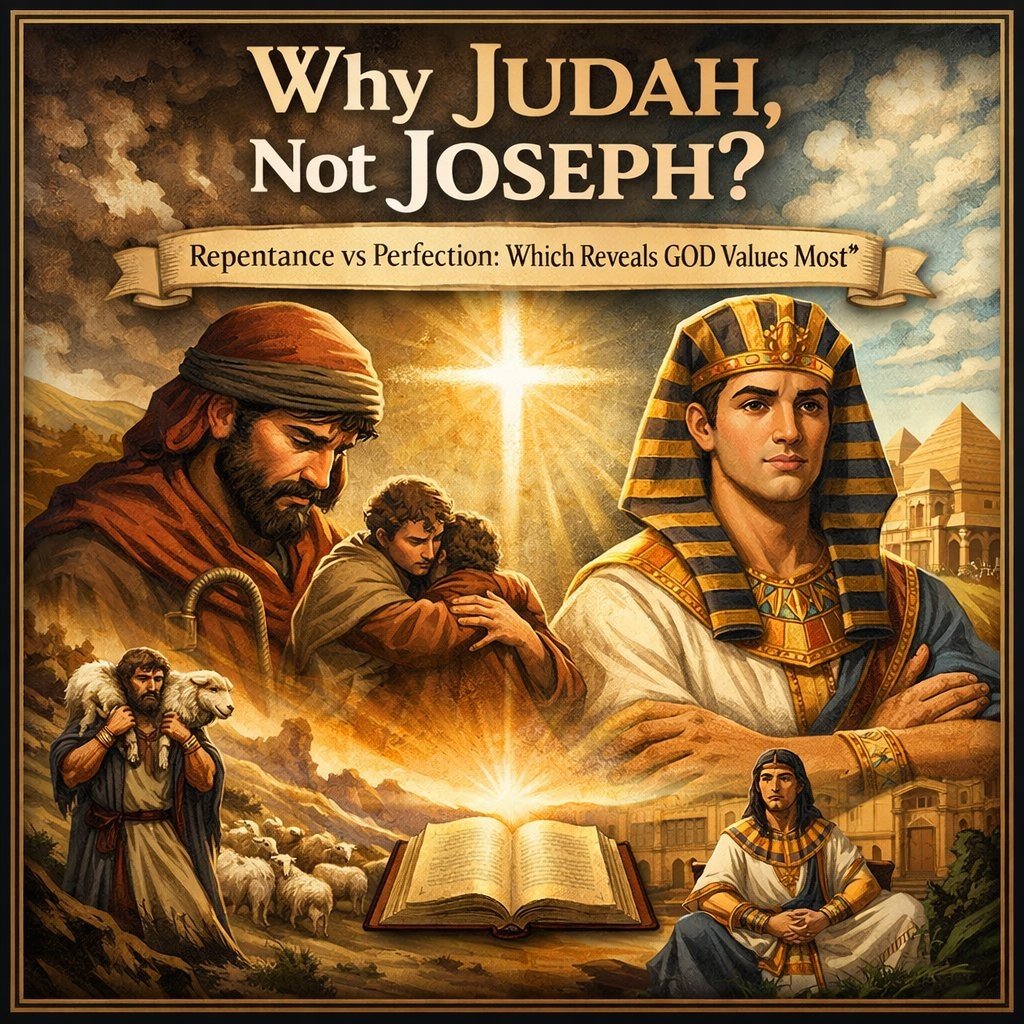
David also sinned. And David’s sin was not small. He committed adultery, abused power, and arranged the death of Uriah, an innocent and loyal man. David did not merely fall into weakness; he used authority to cover his sin.
Yet when Nathan came and said, “You are the man,” David did not defend himself. He did not blame Bathsheba. He did not blame the pressure. He did not protect his throne. He said, “I have sinned against the LORD.”
Then in Psalm 51, David prayed, “Do not cast me away from Your presence, and do not take Your Holy Spirit from me.”
David knew what happened to Saul. He had seen a king lose the Spirit. Therefore, when David was exposed, his deepest fear was not losing the throne, reputation, or power. His deepest fear was losing God’s presence.
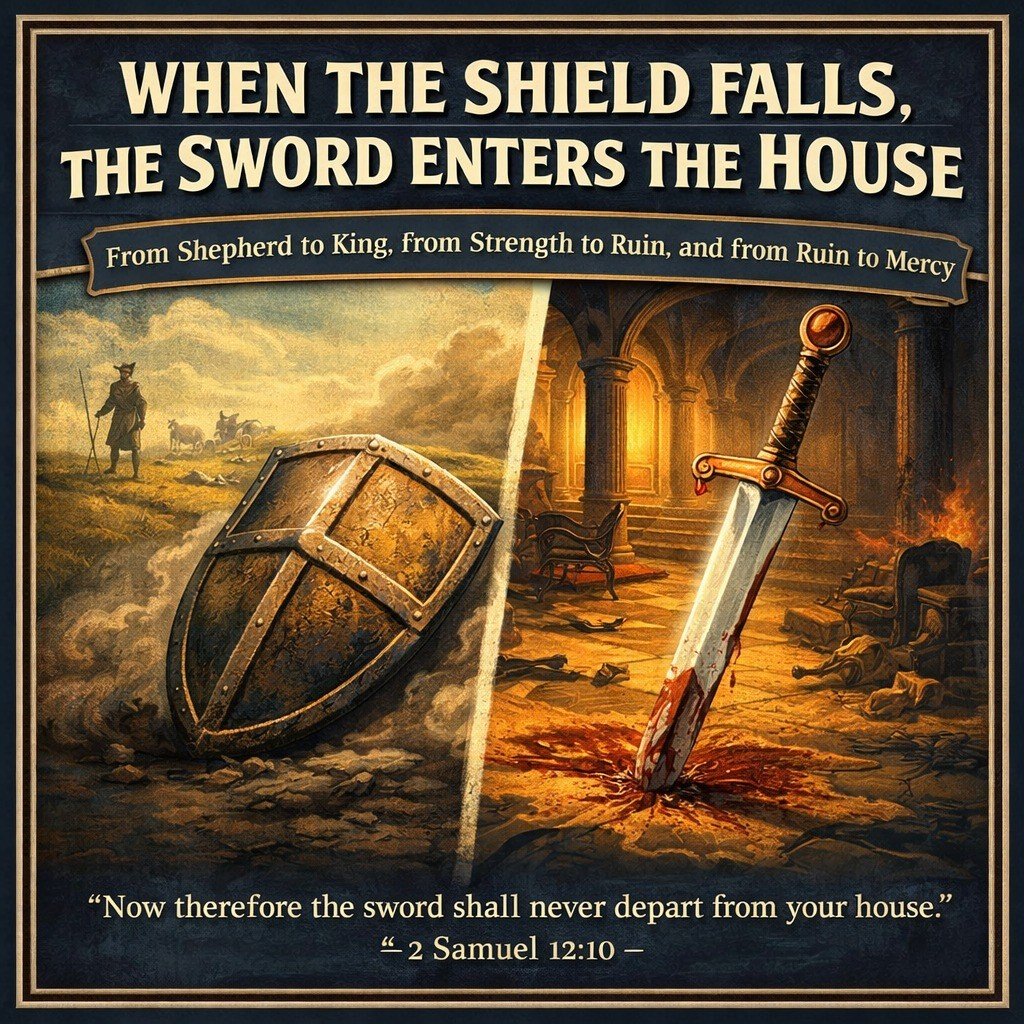
David suffered consequences. The child died. The sword entered his house. His family was fractured. His sin was forgiven, but not treated lightly.
Yet David did not lose the Spirit.
This is the moral of Saul and David: the soul is revealed by how it responds to correction.
Saul sinned and defended himself. David sinned and judged himself. Saul protected his image and lost God’s presence. David exposed his sin and kept God’s presence.
Many can hear instructions before they fall. Fewer can hear corrections after they are exposed.
Peter and Judas: The Voice After Failure
But what happens when the fall has already happened? What happens when the denial has been spoken, the betrayal completed, the blood already shed?
Then another voice comes.
Failure is not the final voice. The voice after failure determines whether the soul returns or dies.
Peter and Judas bring us to this final crisis.
Both walked with Jesus. Both heard His words. Both saw His miracles. Both sat near the Light. Yet both failed Him near the hour of darkness.
Judas betrayed Jesus. Peter denied Jesus. One sold Him. The other swore he did not know Him. Their sins were different, but both souls came face to face with shame.
Judas’ sin was terrifying. He betrayed innocent blood. He knew it. He returned to the chief priests and said, “I have sinned by betraying innocent blood.” But they answered him with coldness: “What is that to us? See to it yourself.”
That was the voice of religion without mercy.
Judas brought his guilt to the accomplices of his sin, not to the Saviour he wounded. He returned the silver, but he did not return himself. He felt remorse, but remorse did not lead him back to Christ. It led him into despair.
This is the difference between remorse and repentance.
Remorse says, “I hate what I have done.” Repentance says, “I return to the One I have sinned against.”
Judas had remorse. But he listened to the voice that said, “You are finished.” He allowed failure to become his final name.
Peter also failed. He denied Jesus three times. When the rooster crowed, he remembered Jesus’ word and went out and wept bitterly. His sorrow was real. His shame was deep. But Peter’s sorrow did not become his grave.
Later, the risen Christ came to him. Jesus did not pretend Peter had not denied Him. He did not erase the failure. He restored the man.
“Do you love Me?” Jesus asked.
Then came the commission: “Feed My sheep.”
Peter’s failure became a classroom, not a grave. The voice of Christ became louder than the voice of shame. Peter failed, but he remained reachable. Judas failed, but he listened to despair.
Remorse Is Not Repentance
This is the frightening lesson: the soul is not shaped only by the voice before sin. It is also shaped by the voice after sin.
Before failure, the wrong voice tempts. During failure, the wrong voice blinds. After failure, the wrong voice condemns.
It says, “You are finished.”
It says, “You cannot return.”
It says, “There is no place for you anymore.”
It says, “Your failure is your identity.”
Christ Speaks a Better Word
But Christ speaks a better word.
He does not deny sin. He does not call darkness light. He does not pretend betrayal, denial, lust, murder, or compromise are small things. But He calls the soul back to Himself.
Manasseh and the Reach of Mercy
This is why Manasseh must be remembered.
If Judas believed his sin was too great, Scripture gives us Manasseh as a witness against despair. Manasseh was guilty of horrifying evil. He led Judah into idolatry, sorcery, corruption, and bloodshed. Scripture says he shed much innocent blood until he filled Jerusalem from one end to another.
Yet when judgment came upon him, Manasseh humbled himself greatly before God. He prayed. God heard him. God restored him.
This does not make sin light. It makes mercy terrifyingly great.
Manasseh filled Jerusalem with innocent blood, yet God heard his repentance. Judas betrayed innocent blood, yet he did not wait to hear whether mercy could still speak.
Therefore, Judas’ tragedy was not that his sin was greater than God’s mercy. His tragedy was that he listened to despair before he listened for mercy.
Judas could not atone for innocent blood by shedding his own blood. Only the innocent blood he betrayed could atone for him.
This is the revelation: no sinner should decide for God that mercy is no longer available. Despair becomes dangerous because it makes the soul pronounce judgment before God has finished speaking.
So the issue is not whether man hears voices. Samuel heard. Solomon heard. Saul heard. David heard. Peter heard. Judas heard. Manasseh heard.
The issue is which voice the soul obeys.
A soul can be called into destiny like Samuel.
A soul can fall from glory like Solomon.
A soul can lose the Spirit, as Saul did.
A soul can be corrected and preserved, as with David.
A soul can be restored after denial, like Peter.
A soul can be swallowed by despair like Judas.
A soul can be guilty of innocent blood and still find mercy like Manasseh.
Therefore, the final question is not, “Have you failed?”
Which Voice Will You Listen to Now?
The final question is, “Which voice will you listen to now?”
The soul is never neutral. It is always becoming the shape of the voice it obeys.
Related Ideas
The Voice We Obey — repeated obedience gives a voice increasing authority over the soul.
Surrender — discernment becomes meaningful when the heart is willing to obey what God reveals.
Connected Ideas
Discernment · Repentance · Correction · Mercy · Shame and Restoration · Obedience · Spiritual Formation
Originally published on X on 2026-07-09. This website edition preserves the original essay while adding structural headings and knowledge links.
- The Voice You Obey Becomes the Master You Serve
- The Voice That Shapes the Soul
- The Soul that can hear the Voice of Good and the Voice of Evil