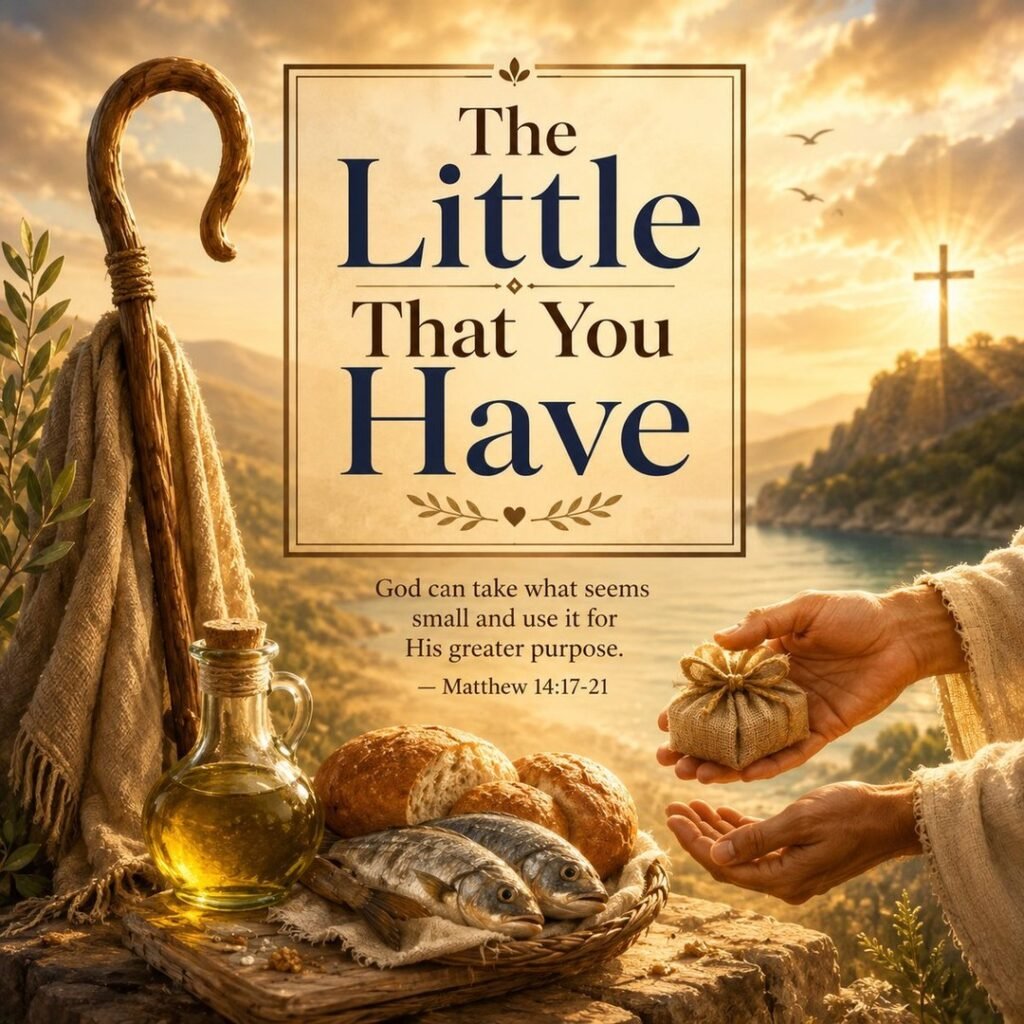
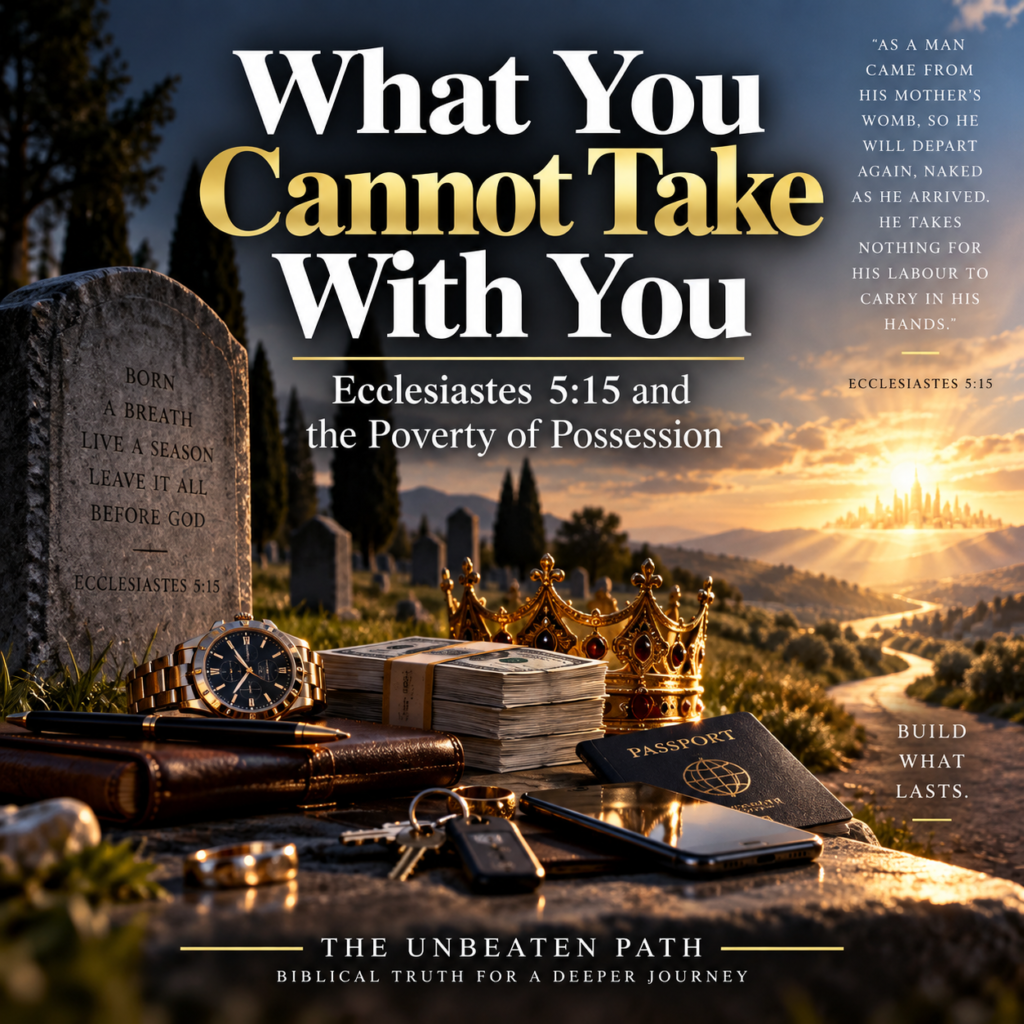
Core ideaWealth is not God's final measure of success. Money is an entrusted resource that reveals the heart: true success is found in faithful stewardship, generosity, obedience and becoming rich toward God rather than merely rich toward ourselves.
In a society where achievement is often measured by income, property, titles, and visible success, it is not surprising that many people instinctively associate wealth with being successful. Money seems to speak loudly. It opens doors, commands respect, provides comfort, reduces certain anxieties, and gives a person choices that others may not have. In a highly competitive place like Singapore, where the cost of living is high and social comparison is constant, wealth can easily become more than a tool. It can become a scoreboard.
But the question remains: Is being rich the same as being successful?
Is Being Rich the Same as Being Successful?
From the world’s point of view, the answer may often appear to be yes. A wealthy person is admired, envied, followed, and consulted. His opinions are taken seriously. His lifestyle is noticed. His achievements are praised. Society may assume that because he has accumulated much, he must have “made it.”
Yet from God’s standard, the answer is far deeper. Wealth may be a form of achievement, but it is not the final definition of success. In the Bible, the truly successful person is not the one who merely possesses much, but the one who is faithful with what God has entrusted to him. Wealth does not automatically prove faithfulness, just as poverty does not automatically prove failure. The real issue is not how much a person has, but what his possessions reveal about his heart.
Jesus gives one of the clearest warnings when He says, “What will it profit a man if he gains the whole world, and loses his soul?” This statement strikes directly at the heart of worldly success. It imagines a person who has gained everything the world can offer: wealth, fame, status, influence, comfort, security, applause, and power. Yet if that person loses his soul, he has not succeeded in the deepest sense. He has made the worst trade possible. He has gained what is temporary and lost what is eternal.
This is why the Bible does not allow us to define success by money alone. Money can measure purchasing power, but it cannot measure the condition of the soul. Money can buy a house, but not peace. It can buy medical care, but not eternal life. It can buy luxury, but not holiness. It can buy attention, but not true love. It can create status, but not righteousness. It can give a person many options, but it cannot answer the ultimate question: “Am I right before God?”
The Issue Is Not Wealth, but Its Place in the Heart
The Bible is not against wealth itself. Abraham was wealthy. Job was wealthy. Joseph of Arimathea was wealthy. Lydia was a businesswoman. There were people of means who served God faithfully. Therefore, Christianity does not teach that poverty is automatically holy or that wealth is automatically sinful. The issue is never simply the possession of wealth. The issue is the position of wealth in the heart.
A person may possess wealth, or wealth may possess the person.
That is why Jesus said, “You cannot serve God and money.” He did not say a person cannot have money. He said a person cannot serve money. Money becomes dangerous when it moves from being a servant to becoming a master. It becomes dangerous when it determines identity, controls emotions, replaces trust in God, and shapes one’s view of people. When money becomes the measure of worth, then the poor are despised, the rich are idolised, and the human soul is reduced to a financial statement.
From Owner to Steward
In God’s standard, a wealthy person should not first define himself as “a rich man.” He should define himself as a steward. This is a powerful shift. An owner says, “This is mine.” A steward says, “This has been entrusted to me.” An owner asks, “How much can I keep?” A steward asks, “What does God expect me to do with this?” An owner sees wealth as identity. A steward sees wealth as responsibility.
Psalm 24:1 says, “The earth is the Lord’s, and everything in it.” If everything ultimately belongs to God, then wealth is not absolute ownership. It is entrusted management. The wealthy person is not the final owner of his resources. He is accountable to the true Owner. This means that every dollar, every property, every business opportunity, every investment, and every influence becomes part of a larger moral and spiritual responsibility.
This changes the meaning of wealth completely. Wealth is no longer merely proof that one is clever, capable, or successful. Wealth becomes a test of faithfulness.
Money as a Test of Faithfulness
Jesus teaches this in Luke 16:10–11: “One who is faithful in a very little is also faithful in much… If then you have not been faithful in the unrighteous wealth, who will entrust to you the true riches?” Here, money is treated as a training ground. Earthly wealth is not the highest treasure, but it reveals whether we can be trusted. How we handle money shows whether we are disciplined or careless, honest or corrupt, generous or selfish, humble or proud, God-centred or self-centred.
This is where money and faithfulness are deeply connected. Money is not the proof of faithfulness, but it is one of the tests of faithfulness. A person’s bank balance does not reveal everything about his soul, but his attitude toward money reveals much. Does he earn it honestly? Does he exploit others to gain it? Does he pay fairly? Does he give generously? Does he provide responsibly? Does he save wisely? Does he worship comfort? Does he fear losing wealth more than he fears losing God? Does money make him more humble or more arrogant?
What It Means to Be Rich Toward God
The rich fool in Luke 12 is a powerful example. He was successful by worldly standards. His land produced plentifully. His barns were full. His future seemed secure. He said to himself, “You have ample goods laid up for many years; relax, eat, drink, be merry.” Yet God called him a fool. Why? Not because he had wealth, but because he had no eternal perspective. He stored up treasure for himself but was not rich toward God.
That phrase, “rich toward God,” gives us the biblical alternative to worldly success. The question is not simply, “Are you rich?” The question is, “Are you rich toward God?” Are you rich in faith? Rich in mercy? Rich in gratitude? Rich in obedience? Rich in generosity? Rich in good works? Rich in humility? Rich in eternal purpose?
A person may be rich in the bank and bankrupt in the soul. Another may be poor in possessions but rich in faith. God sees both clearly.
Wealth Expands Responsibility
Paul gives direct instruction to the wealthy in 1 Timothy 6:17–18. He says they should not be arrogant, nor put their hope in the uncertainty of riches, but in God. They should do good, be rich in good works, generous, and ready to share. This passage does not condemn the rich. Instead, it defines their responsibility. Wealth must not produce pride. Wealth must not become security. Wealth must not end in self-indulgence. Wealth must become a platform for good works.
This means that if a person is wealthy, his wealth expands his responsibility. He has more capacity to help, more ability to build, more opportunity to support, more power to influence, and therefore greater accountability before God. The wealthy person must ask, “Why has God placed this in my hand? Who can be helped? What can be built? What injustice can be reduced? What suffering can be eased? What mission can be advanced? What good can outlive me?”
In this sense, wealth is not merely a blessing to enjoy; it is a calling to steward.
What If You Have Little Money?
But what about those who have no wealth on hand? If a person has little money, does his responsibility to help his neighbour disappear? The Bible’s answer is no. The form changes, but the calling remains.
Paul says in 2 Corinthians 8:12, “If the readiness is there, it is acceptable according to what a person has, not according to what he does not have.” This is a deeply merciful principle. God does not demand from a person what he does not possess. A poor man is not judged by the same financial capacity as a wealthy man. A person who has no money to give is not condemned for failing to give what he does not have.
But he is still called to love.
When Peter met the lame man at the temple gate in Acts 3, he said, “Silver and gold I do not have, but what I do have I give you.” Peter had no money to offer, but he was not empty. He gave what he had: attention, compassion, faith, prayer, and spiritual authority. This teaches us that neighbourly love is not limited to financial ability.
If one has no wealth, one can still give time. One can give encouragement. One can listen. One can pray. One can visit. One can connect a person to help. One can offer wisdom, labour, friendship, presence, and dignity. Sometimes the poor man’s compassion may be more precious than the rich man’s cheque. Sometimes being present in another person’s pain is itself a sacred gift.
Therefore, the scope of faithfulness changes according to what has been entrusted. The wealthy steward money. The poor steward mercy. The skilled steward ability. The wise steward counsel. The connected steward relationships. The strong steward strength. The prayerful steward intercession. The faithful steward whatever is in his hand.
The principle is the same: God asks us to be faithful with what we have, not resentful over what we lack.
The Danger of Comparison
The danger for the wealthy is pride. The danger for the poor is despair. The danger for both is comparison. The rich may think, “I am better because I have more.” The poor may think, “I am useless because I have less.” Both views are false. A person’s worth is not determined by wealth, and a person’s calling is not erased by lack.
Jesus’ praise in the parable of the talents was not, “Well done, rich servant.” It was, “Well done, good and faithful servant.” That is the true measure. Faithfulness is the standard. The servant who received five talents was expected to be faithful with five. The servant who received two was expected to be faithful with two. The judgment was not based on equal amount, but on faithful stewardship.
Identity as Servant and Steward
This has powerful implications for how we define ourselves. If a person is wealthy, he should not say, “I am successful because I am rich.” He should say, “God has entrusted wealth to me, and I must be faithful.” If a person is not wealthy, he should not say, “I am unsuccessful because I am poor.” He should say, “God has entrusted something to me, and I must be faithful with it.”
This removes both arrogance and shame.
A wealthy believer can define himself this way: “I am not the owner of my wealth; I am a steward of God’s resources. I am not measured by what I possess, but by my faithfulness, humility, generosity, justice, and obedience before God. I am blessed not to worship wealth, but to use wealth for God’s purposes and the good of others.”
A person without wealth can define himself this way: “I may not have silver or gold, but I still have something to offer. I can love, serve, pray, encourage, help, and remain faithful with what God has placed in my hands.”
In both cases, the identity is the same: servant, steward, child of God.
Correcting the World’s Definition of Success
This is where the world’s definition of success must be corrected. The world asks, “How much do you have?” God asks, “What have you done with what I gave you?” The world asks, “How high have you climbed?” God asks, “Were you faithful on the way up?” The world asks, “How many people admire you?” God asks, “How many people did you love?” The world asks, “What is your net worth?” God asks, “What is the condition of your soul?”
Money can be part of faithfulness when it is earned honestly, managed wisely, shared generously, and surrendered to God. Wealth can become a holy instrument when used to provide, protect, build, bless, and serve. But money becomes spiritually dangerous when it defines identity, feeds pride, replaces God, or blinds us to our neighbour.
Therefore, the Christian view is neither to worship wealth nor despise it. It is to redeem it. Wealth must be brought under the lordship of God. It must be converted from self-glory into service, from possession into stewardship, from pride into generosity, from anxiety into trust, and from temporary gain into eternal fruit.
True success is not being rich in the eyes of society. True success is being faithful in the eyes of God.
What Remains at the End
At the end of life, no one brings his bank account into eternity. The titles will remain behind. The properties will be transferred. The companies will change hands. The applause will fade. The body will return to dust. What remains is the soul before God.
Then the question will not be, “Were you rich?”
The question will be, “Were you faithful?”
And the greatest reward will not be the world saying, “He was successful.”
It will be the Master saying, “Well done, good and faithful servant.”
That is the wealth that never perishes. That is success in God’s standard.
Related Ideas
Wealth as Stewardship — wealth is entrusted responsibility rather than ultimate ownership or identity.
Faithfulness Before Success — God measures faithfulness before visibility, scale, wealth, or human applause.
What Is in Your Hand? — faithfulness begins with what God has already entrusted to us.
Connected Ideas
Stewardship · Generosity · Contentment · Faithfulness · Identity · Money and the Heart · Eternal Perspective
Originally published on X on 2026-07-14. This website edition preserves the original essay while adding structural headings and knowledge links.