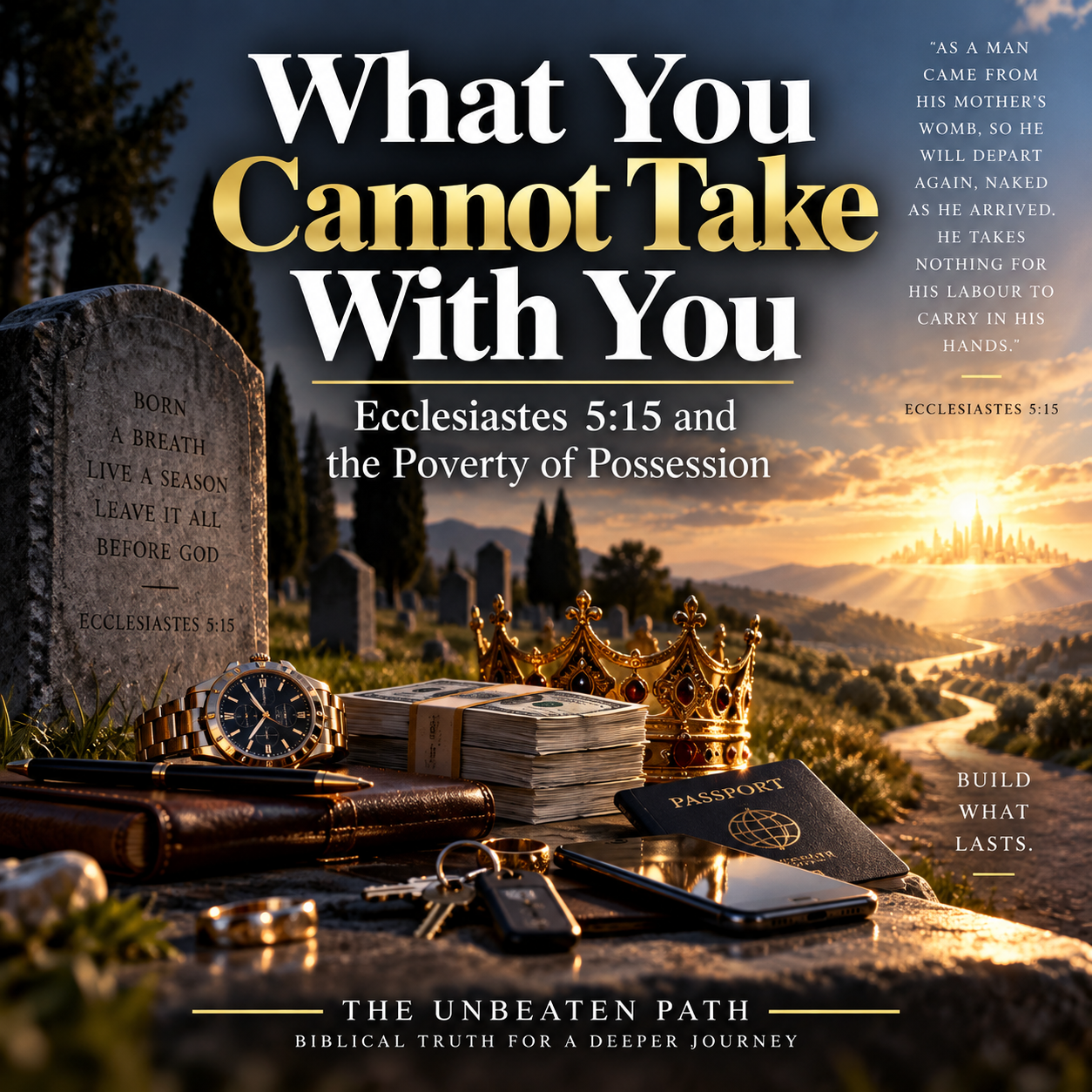
Core ideaDeath exposes the temporary nature of possession. We may spend a lifetime accumulating wealth, status, knowledge, property, and achievement, yet none can be carried beyond the grave. Ecclesiastes therefore does not condemn work or possessions themselves; it confronts the illusion that they can provide lasting identity or security. Scripture redirects the heart toward treasure that death cannot confiscate: reconciliation with God, eternal life in Christ, faithful stewardship, and a life ordered toward His kingdom rather than merely toward what can be accumulated under the sun.
We spend much of life acquiring things.
Money. Property. Possessions. Qualifications. Titles. Experiences. Influence. Knowledge. Reputation.
Some of these things are useful. Some are gifts. Some represent years of honest work.
Yet Ecclesiastes forces us to confront a truth we usually prefer not to think about:
We will eventually leave every material possession behind.
Ecclesiastes 5:15 says that as a person comes from the mother’s womb, so that person departs.
We arrive with empty hands.
We leave with empty hands.
Between those two moments, we may spend decades filling those hands.
But death eventually opens them again.
Death Reveals the Temporary Nature of Possession
Ecclesiastes does not say that possessions are inherently evil.
The problem is not that we possess things.
The problem begins when things possess us.
We begin to measure security by what we own.
We measure significance by what we have achieved.
We measure success by what other people can see.
And slowly, what was meant to be used becomes what we live for.
Death exposes the weakness of that foundation.
It does not matter how tightly we hold something.
Eventually we must release it.
You Came From Dust, Not From Your Possessions
Genesis 2:7 describes humanity as formed from the dust of the ground, receiving life from God.
That means our deepest identity did not originate in what we accumulated.
We were alive before we had money.
We had worth before we had achievements.
We were creatures made by God before society gave us a title, profession, status, or reputation.
Possessions may describe circumstances.
They cannot define the soul.
And when we forget this, we begin asking temporary things to carry eternal weight.
Ecclesiastes Looks at Life Under the Sun
Ecclesiastes repeatedly examines human striving “under the sun.”
Ecclesiastes 1:17 describes the search for wisdom and understanding within the limits of earthly life.
The Teacher looks at labor, pleasure, achievement, wealth, wisdom, and time.
Again and again the same problem appears:
Nothing under the sun can make itself permanent.
The worker dies.
The wealthy die.
The wise die.
The powerful die.
The possessions remain for someone else.
That observation is not meant to produce despair.
It is meant to destroy illusion.
The Great Illusion Is Ownership Without an End
We often speak of “my house,” “my money,” “my business,” “my career,” “my investments,” and “my possessions.”
There is nothing wrong with ordinary language.
But spiritually, ownership is always temporary.
We are stewards before we are owners.
Everything entrusted to us is held for a season.
Time itself is borrowed.
Strength is borrowed.
Opportunity is borrowed.
Money is borrowed.
Even the body eventually returns to the earth.
Death does not merely end possession. It reveals what was never truly ours to keep.
Jesus Warned Us About Treasure
In Matthew 6:19–21, Jesus warns against storing up treasure on earth where moth, decay, and theft can destroy it.
He tells us instead to store treasure in heaven.
Then He explains why:
Where your treasure is, your heart will be also.
The issue is not merely financial.
Treasure reveals allegiance.
What we treasure receives our attention.
What we treasure receives our sacrifice.
What we treasure shapes our decisions.
What we treasure eventually begins governing the heart.
This is why possessions are spiritually significant even when possessions themselves are morally neutral.
Seek First What Death Cannot Take
Matthew 6:33 tells us to seek first the kingdom of God and His righteousness.
Notice the order.
The kingdom comes first.
Possessions come second.
Our culture frequently reverses the order.
We are taught to secure ourselves first and think about God afterward.
Build the career.
Build the portfolio.
Build the property holdings.
Build the lifestyle.
Then perhaps make room for God.
Jesus reverses this.
Seek first what is eternal, and let temporary things remain temporary.
The World Cannot Give the Soul What It Needs
James 4:4 uses deliberately severe language about friendship with the world.
The warning is not that Christians must reject creation or ordinary human life.
The danger is allegiance to a system that teaches us to live as though God were unnecessary.
The world says:
- You are what you own.
- You are what you achieve.
- You are what others think of you.
- You are secure if you have enough.
- You have succeeded if your life looks impressive.
Death eventually contradicts every one of these claims.
It strips away the visible markers and leaves the deeper question:
Who are you before God?
Human Wisdom Cannot Defeat Death
1 Corinthians 3:19–20 warns about the limitations of worldly wisdom before God.
Human beings have achieved extraordinary things.
We build cities.
We create technology.
We accumulate knowledge.
We extend life expectancy.
Yet despite all our intelligence, death remains beyond human mastery.
We may delay it.
We may study it.
We may manage its circumstances.
But no human wisdom can simply abolish it.
This is why the gospel addresses a problem that wealth and human intelligence cannot solve.
Jesus Offers What Possessions Cannot
John 3:16 moves the question from temporary life to eternal life.
God’s answer to mortality is not that we accumulate enough to defeat death.
His answer is Christ.
Eternal life is not purchased with earthly wealth.
It is received through faith in the Son.
This radically changes the meaning of wealth.
If eternal life cannot be bought, then the most important possession in existence is not a possession at all.
It is relationship with God.
Christ Gives Us a Home Beyond What We Leave Behind
In John 14:2, Jesus speaks of His Father’s house and of preparing a place for His people.
This is a striking contrast to Ecclesiastes.
Ecclesiastes says we leave earthly possessions behind.
Jesus speaks of a home that is not dependent upon what we can build or preserve here.
The Christian hope therefore does not consist in carrying earthly wealth into eternity.
It consists in belonging to Christ.
Our security is not that we can preserve everything we love.
Our security is that death cannot separate Christ from those who belong to Him.
God’s Future Is Larger Than Your Present Possessions
Jeremiah 29:11 is often quoted as though God promises every individual an easy earthly future.
Its original context is deeper: God’s people were facing exile, waiting, uncertainty, and a future they could not control.
Their hope did not rest in immediate circumstances.
It rested in God’s faithfulness to His purposes.
That remains important for us.
Our future with God cannot be measured merely by whether our earthly assets increase.
Sometimes faithfulness may even cost us what the world calls success.
But what God is preparing is not limited to the temporary circumstances of this life.
Death Will Not Have the Final Word
Ecclesiastes is brutally honest about mortality.
But the New Testament takes us beyond the grave.
1 Corinthians 15:54–55 announces the defeat of death.
This changes everything.
The Christian does not deny death.
The Christian denies that death is ultimate.
Possessions cannot cross the grave.
But resurrection can.
Property cannot cross the grave.
But life in Christ can.
Reputation cannot cross the grave.
But reconciliation with God can.
The question therefore is not merely what you must leave behind.
It is what death cannot take from you.
This Does Not Mean Stop Working or Stop Building
Ecclesiastes is not an argument for laziness.
The Bible does not teach us to despise work, abandon responsibility, or refuse material provision.
The issue is order.
Work faithfully.
Build wisely.
Provide responsibly.
Use money carefully.
Enjoy God’s gifts gratefully.
But never ask the gift to become the Giver.
Never ask temporary wealth to become eternal security.
And never allow accumulation to become the purpose of life.
Possession Becomes Stewardship When Eternity Is Remembered
If everything is temporary, then the right question changes.
Instead of asking only:
“How much can I accumulate?”
we begin asking:
“What should I do faithfully with what God has entrusted to me while I still have it?”
This turns ownership into stewardship.
Money becomes something to manage.
Influence becomes something to use responsibly.
Time becomes something to redeem.
Opportunity becomes something to answer for.
Life itself becomes a trust.
What Are You Building That Can Survive Your Death?
This is where Ecclesiastes becomes personal.
Imagine that every possession you own eventually passes into another person’s hands.
Because it will.
Imagine your career title disappearing.
Because it will.
Imagine your achievements becoming memories in the minds of people who will themselves eventually die.
What remains?
Your relationship with God matters.
The person you became matters.
The love you gave matters.
The truth you obeyed matters.
The way you stewarded what God entrusted to you matters.
Your possessions will be left behind.
But your life before God will not become meaningless simply because your possessions cannot accompany you.
The Principle
Death exposes what is temporary so that we may learn to treasure what is eternal.
We entered this world with nothing.
We will leave its possessions behind.
But that does not make life meaningless.
It makes the ordering of life urgent.
Do not spend an entire lifetime gaining what death will confiscate while neglecting what death cannot destroy.
Questions for Reflection
- What possession, achievement, or status am I most tempted to use as proof of my worth?
- If I truly believed everything material was temporary, what would I use differently?
- Am I accumulating wealth mainly for security, identity, or faithful stewardship?
- Where is my treasure presently shaping my heart?
- What am I building in my life that death cannot take away?
- If I stood before God today, what would suddenly seem far less important than it does now?
Related Essays
Rich Toward God — earthly abundance becomes spiritually dangerous when wealth grows while the soul remains poor toward God.
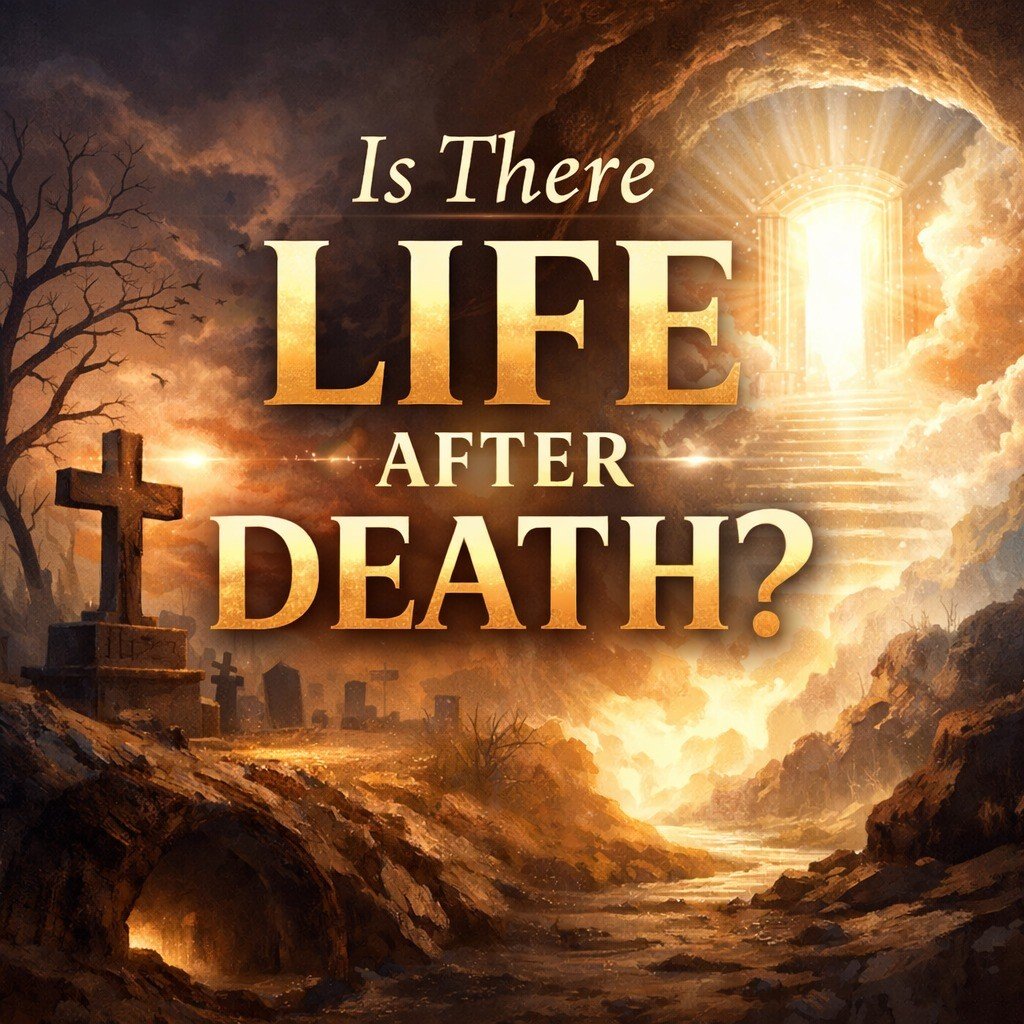
Is There Life After Death? — Scripture carries the question of mortality beyond the grave into resurrection, judgment, eternal life, and Christ’s victory over death.
When Death Draws Near — mortality teaches us to number our days, reject simplistic judgments, and locate our security in reconciliation with God rather than length of life.
You Can Predict Your Future! — what we repeatedly treasure, trust, and pursue helps reveal the spiritual direction in which our life is moving.
Related Ideas
Death Reveals What Was Never Yours to Keep — mortality exposes the temporary nature of possession and turns ownership into stewardship before God.
Connected Ideas
Mortality · Possession · Stewardship · Wealth · Treasure · Eternity · Death · Resurrection · Identity · Kingdom of God · Contentment · Purpose