Biblical Foundation
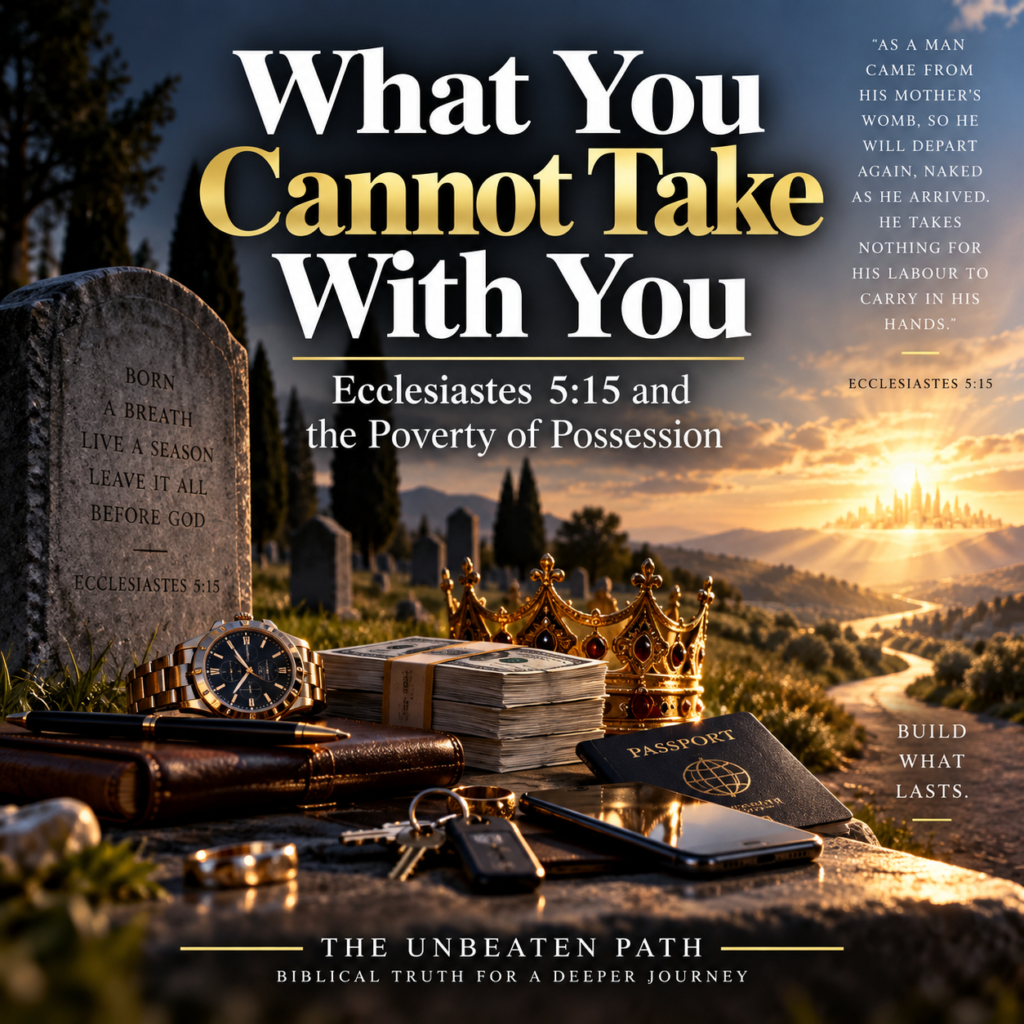
Psalm 24:1 begins with the foundation of biblical stewardship: “The earth is the Lord’s, and everything in it.” If everything ultimately belongs to God, then what we call our wealth is better understood as something entrusted to us for a time.
This changes the posture of the heart. An owner says, “This is mine.” A steward asks, “What does God expect me to do with what He has placed in my hands?”
Wealth Is a Trust, Not an Identity
Scripture does not teach that wealth itself is evil. The deeper danger is allowing wealth to become identity, security, status, or master.
A person may possess wealth, or wealth may begin to possess the person. Stewardship keeps money in its proper place: useful, powerful, and accountable—but never ultimate.
Faithfulness Is Tested in What We Manage
Luke 16:10–11 connects faithfulness in material things with larger spiritual responsibility. Money therefore becomes more than a financial matter; it becomes one arena in which the condition of the heart is revealed.
How we earn, hold, spend, save, give, and share can expose what we trust, what we fear, what we love, and what we believe belongs to us.
Rich Toward God
In Luke 12, the rich fool succeeds economically and fails spiritually. His mistake is not abundance itself. His mistake is treating abundance as the final meaning of life.
To be rich toward God is to let resources serve love, obedience, generosity, mercy, justice, worship, and the good of others rather than allowing accumulation to become the end in itself.
Greater Resources Bring Greater Responsibility
Wealth expands choice, but it also expands responsibility. More resources create more possibilities for service, generosity, employment, relief, investment, hospitality, and kingdom usefulness.
The biblical question therefore shifts from “How much do I own?” to “What responsibility accompanies what I have been entrusted with?”
Stewardship Is Not Only for the Wealthy
2 Corinthians 8:12 reminds us that God evaluates willingness according to what a person has, not according to what he does not have.
Stewardship therefore applies to every person. Someone with little money may still steward time, skill, influence, relationships, experience, compassion, hospitality, prayer, or practical help.
Money Cannot Give the Soul Its Worth
Wealth can provide comfort, choice, and opportunity, but it cannot finally answer the question of human worth. The Christian does not need money to prove significance.
When identity rests in God rather than accumulation, money becomes easier to hold with an open hand. We may use it seriously without asking it to tell us who we are.
Questions for Discernment
- Do I think of what I possess primarily as ownership or stewardship?
- What does my use of money reveal about what I trust and value?
- Has wealth become part of how I measure my worth or success?
- What responsibility has come with the resources God has placed in my hands?
- What would it mean for me to become richer toward God?
Related Essay
Rich Toward God: Wealth, Faithfulness, and the True Measure of Success — a fuller biblical exploration of wealth, identity, generosity, faithfulness, and the difference between possessing money and serving it.
Connected Ideas
Faithfulness Before Success · What Is in Your Hand? · Surrender · Generosity · Contentment · Money and the Heart · Eternal Perspective