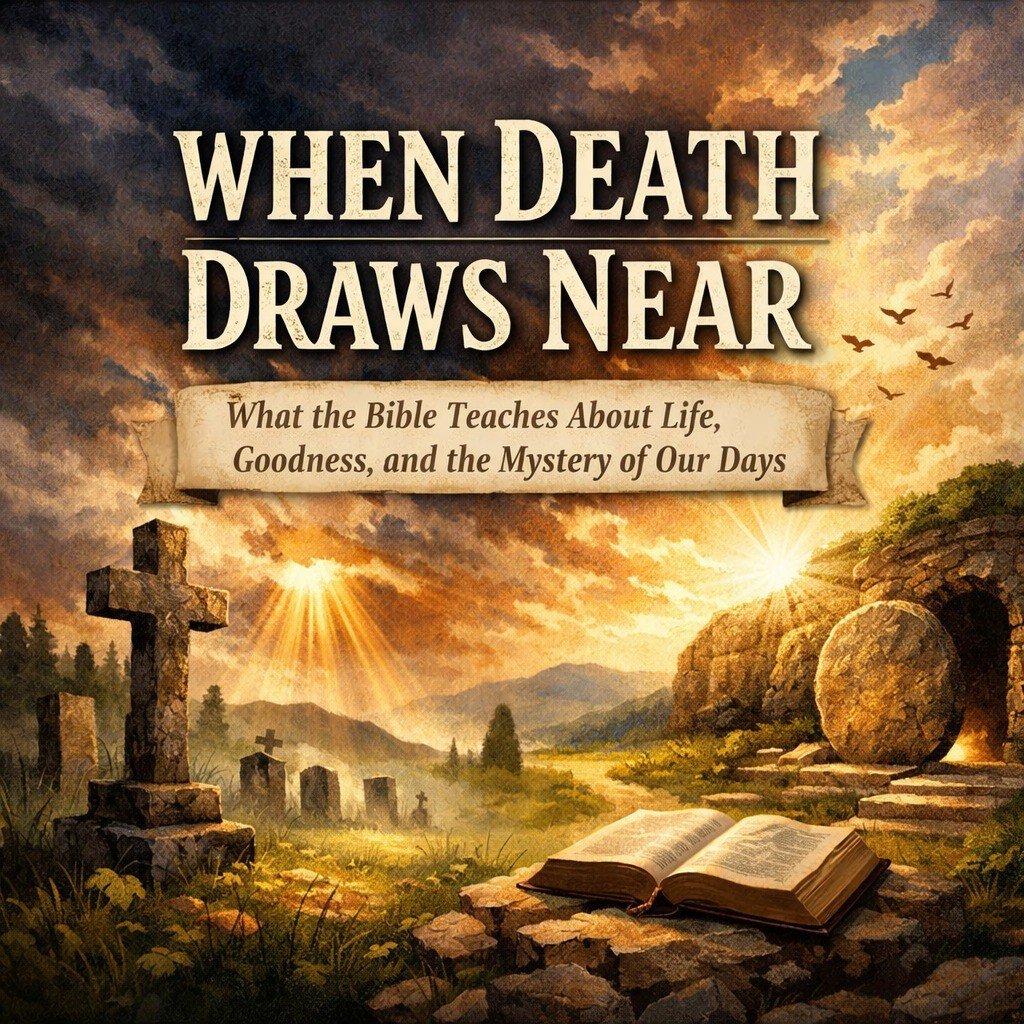
Core ideaScripture does not promise that goodness will guarantee a long life or protect us from sudden death. Wisdom and righteousness often protect us from self-inflicted destruction, but even the righteous may die young. The biblical response to mortality is therefore not to bargain with God for more years, but to number our days, live faithfully, remain ready to meet Him, and place our final hope in Christ who has defeated death.
Death Humbles Every Human Life
Death is one of the few realities no human being can escape, yet it is one of the subjects most people avoid. We speak of success, health, growth, wealth, and purpose, but when the thought of death enters the room, the human heart often becomes quiet. It is quiet because death humbles us. It reminds us that no matter how strong, rich, admired, or wise a person may be, every life on earth has an appointed limit. The Bible does not treat this truth lightly. It does not hide from it, soften it, or dress it up with comforting illusions. Instead, Scripture brings us face to face with death so that we may learn how to live.
Many people ask a sincere question when thinking about death: if a person has sown goodness on earth, does that lead to a longer life? Does righteousness preserve a person from sudden death? It is a natural question, because deep inside the human heart there is a longing for moral order. We want the world to work in a way that seems fair. We want to believe that if a person lives kindly, walks uprightly, helps others, and honors God, then surely that person should be rewarded with many years and spared from tragedy. But the Bible gives a more profound and more sobering answer.
Why Death Exists
To understand death in the biblical sense, we must begin at the beginning. In the opening chapters of Genesis, man is created by God and placed in a world that is called good. Life comes from God, and man is made not merely to exist, but to live in fellowship with Him. Yet when sin enters through disobedience, death enters with it. The Lord had warned Adam that in the day he ate of the forbidden tree, death would follow. When Adam fell, humanity fell with him. From that point onward, death became part of the human condition. The body would return to dust, and the soul would bear the consequences of separation from God. In this sense, the Bible does not present death as something originally natural to mankind. It presents death as an intruder, the result of sin, the sign that creation has been wounded.
This is why Scripture speaks of death with such seriousness. Death is not just the end of physical movement. It is not merely a biological event. It is tied to the deep spiritual tragedy of man’s alienation from God. The Bible even speaks of different dimensions of death. There is physical death, where the body ceases and returns to the ground. There is spiritual death, where a person lives physically but is cut off inwardly from the life of God. And there is what Revelation calls the second death, the final and dreadful reality of eternal judgment. So when the Bible teaches about death, it is teaching about more than funerals and graves. It is teaching about the human condition apart from divine redemption.
Our Days Remain Under God’s Sovereignty
Yet the Bible also makes something else very clear: death, though terrible, is never outside the sovereignty of God. Our days are not random. Our breaths are not accidents. Ecclesiastes says there is a time to be born and a time to die. Psalm 139 declares that all our days were written in God’s book before one of them came to be. Job, in the midst of pain, acknowledged that the Lord gives and the Lord takes away. This does not mean every sorrow is easy to understand, nor does it remove the sting of loss. But it means the believer is not left to think that death operates independently of God. Even where mystery remains, God remains sovereign.
Does Goodness Lead to a Longer Life?
Now we come to the question many hearts wrestle with: does goodness lead to a longer life? The biblical answer is nuanced. On one hand, Scripture does teach that righteousness, wisdom, and the fear of the Lord tend toward life. The book of Proverbs repeatedly says that wisdom preserves, righteousness leads to life, and the fear of the Lord prolongs days. Honoring one’s parents is connected with long life. A life marked by restraint, humility, diligence, and reverence for God often avoids the destruction that sin brings. The violent man shortens his days. The fool ruins himself. The reckless person invites harm. In this sense, goodness does often contribute to a more stable, peaceful, and sometimes longer earthly life.
This should not surprise us. A person who walks in wisdom is less likely to destroy himself through drunkenness, violence, immorality, bitterness, greed, or lawlessness. A person who honors God may live with greater peace, fewer self-inflicted wounds, stronger relationships, and cleaner habits of soul and body. There is a real biblical principle here: righteousness tends toward life, while sin tends toward death.
The Righteous May Still Die Young
But this is not the whole picture. Proverbs gives us general truths about how life usually works under God’s moral order, but it is not a guarantee that every righteous person will live long or that every wicked person will die early. The rest of Scripture makes this unmistakably clear. Abel was righteous, yet he died young by murder. Joseph suffered unjustly though he was faithful. John the Baptist was holy and bold, yet he was beheaded. Stephen was full of the Holy Spirit, yet he was stoned. And above all, Jesus Christ, the only perfectly righteous man who ever lived, was crucified in the prime of His earthly life.
These examples destroy the simplistic belief that personal goodness guarantees protection from sudden death. If such a doctrine were true, Christ Himself would never have gone to the cross. The Bible does not permit us to believe that a short life means a failed life, or that sudden death proves divine displeasure. In Luke 13, Jesus referred to those who were killed in tragic circumstances and explicitly rejected the idea that they were worse sinners than others. In John 9, when the disciples assumed suffering must be tied directly to someone’s sin, Jesus corrected them. Scripture warns us not to judge a person’s standing before God merely by the length of his days or the manner of his death.
Goodness Is Not a Bargain With Death
This truth is deeply important, because many people secretly live under fear. They think, “If I do enough good, perhaps I can secure myself. Perhaps I can avoid calamity. Perhaps God will owe me extra years.” But goodness was never meant to be treated as a bargain with death. Righteousness is not a payment we offer God in exchange for earthly immunity. Goodness matters, but it matters for a greater reason. It matters because it honors God. It matters because it reflects His character. It matters because it blesses other people. It matters because it shapes the soul for eternity.
Teach Us to Number Our Days
A biblical view of goodness therefore changes the question. Instead of asking, “Can goodness guarantee me a long life?” the wiser question becomes, “What kind of life am I living before God, whether my days be many or few?” Psalm 90 captures this beautifully: “Teach us to number our days, that we may gain a heart of wisdom.” Notice the prayer. Moses does not ask first for more days, but for wisdom in the days given. To number our days is to live with sober clarity. It is to remember that we are not permanent on this earth. It is to turn away from pride and illusion. It is to cease wasting life on things that will not matter when we stand before God.
Death Can Become a Teacher
In this way, death becomes not merely an ending to fear, but a teacher. It teaches urgency. It teaches humility. It teaches repentance. It teaches us to forgive, to love, to obey, and to seek first the kingdom of God. The person who never thinks about death is often the person most careless with life. But the person who remembers death biblically may learn to live with depth, sincerity, and holy purpose.
Christ Entered Death and Broke Its Power
Still, if the Bible ended there, it would leave us only with wisdom under the shadow of judgment. But Scripture does not end with death. Its center is Christ. Jesus did not come only to talk about death. He came to enter it, bear its curse, and break its power. On the cross, He took upon Himself the judgment that sin deserved. In rising from the dead, He declared victory over the grave. This is why the New Testament can speak of death both with realism and with hope. Paul calls death the last enemy, yet he also cries, “O death, where is thy sting?” For the believer, death is still painful, but it is no longer ultimate. It is no longer the final sentence. It has become, through Christ, a defeated enemy awaiting final destruction.
This is the great difference between a merely religious view of death and the Christian one. Christianity does not say, “Be good enough and perhaps death will spare you.” Christianity says, “You cannot save yourself from sin and death, but Christ has done what you could never do.” Eternal life is not earned by goodness. It is received through grace by faith in the Son of God. Then, from that grace, goodness flows. Good works are not the price of salvation; they are the fruit of a life changed by God.
Goodness Cannot Save Us From Mortality
So does sowing goodness lead to longer life without sudden death? Biblically, the answer is this: goodness may often bring peace, order, protection, and blessing in this present life, but it does not guarantee long life, nor does it shield anyone absolutely from sudden death. The righteous may die young. The wicked may live long. But this does not mean goodness is meaningless. It means goodness was never meant to be our shield against mortality. God Himself is our refuge, and eternal life is found not in moral achievement, but in Christ.
The Goal Is Not Simply to Live Long, but to Live Ready
The true hope of the believer is therefore not simply to live long, but to live ready. Ready to meet God. Ready to depart in peace. Ready because sin has been forgiven, because the heart has been reconciled to God, and because Christ has gone before us through the grave into resurrection life. A short life with God is better than a long life without Him. A righteous life is never wasted, even when it seems cut short. In God’s hands, even death cannot cancel His purposes.
To explore death in the biblical context, then, is to come to this conclusion: life is brief, death is real, goodness is precious, but Christ is greater than them all. He alone gives meaning to life, peace in death, and hope beyond the grave. And that is why the believer does not have to live in terror of sudden death. Our calling is not to secure tomorrow by our own goodness, but to walk faithfully with God today, trusting that whether we live or die, we belong to the Lord.
Related Ideas
Live Ready, Not Merely Long — Scripture does not make length of life the ultimate goal. Wisdom teaches us to number our days, live reconciled to God, and remain ready to meet Him whether our days are many or few.
The Final Word Is Resurrection — death remains an enemy, but Christ’s resurrection means it does not possess the final word over those who belong to Him.
God Can Redeem What He Does Not Prevent — suffering and sudden loss are not proof that God has abandoned His purposes; even where mystery remains, redemption remains possible.
Faithfulness Before Success — the length, visibility, or apparent success of a life cannot by itself tell us whether that life was faithful before God.
Connected Ideas
Death · Mortality · Goodness · Wisdom · Providence · Sudden Death · Judgment · Readiness · Resurrection · Hope
Originally published on X on 2026-04-10. This website edition preserves the original essay while adding structural headings and knowledge links.