Core ideaAn offering gives from what we can spare. A sacrifice gives what costs us. God looks at the heart behind the gift, and love shows itself in what it is willing to give up.
The reason the Father loves Me is that I lay down My life to take it up again.
John 10:17
Undying love requires undying sacrifices. It is easy to get married but demanding to stay in a marriage, just as it is easy to fall in love but difficult to stay in love. If we want to do so, we will have died a thousand times. The reason is that sacrifice is the fuel of love. Without fuel, any love will soon turn cold and die, just like any fire will quickly decay and die without having anything to burn on. Small fuel produces small fires, while massive fuel produces big fires. If we want undying love, we must fuel it with undying sacrifices—unfortunately, many hope to have undying love but are unwilling to pay the price.
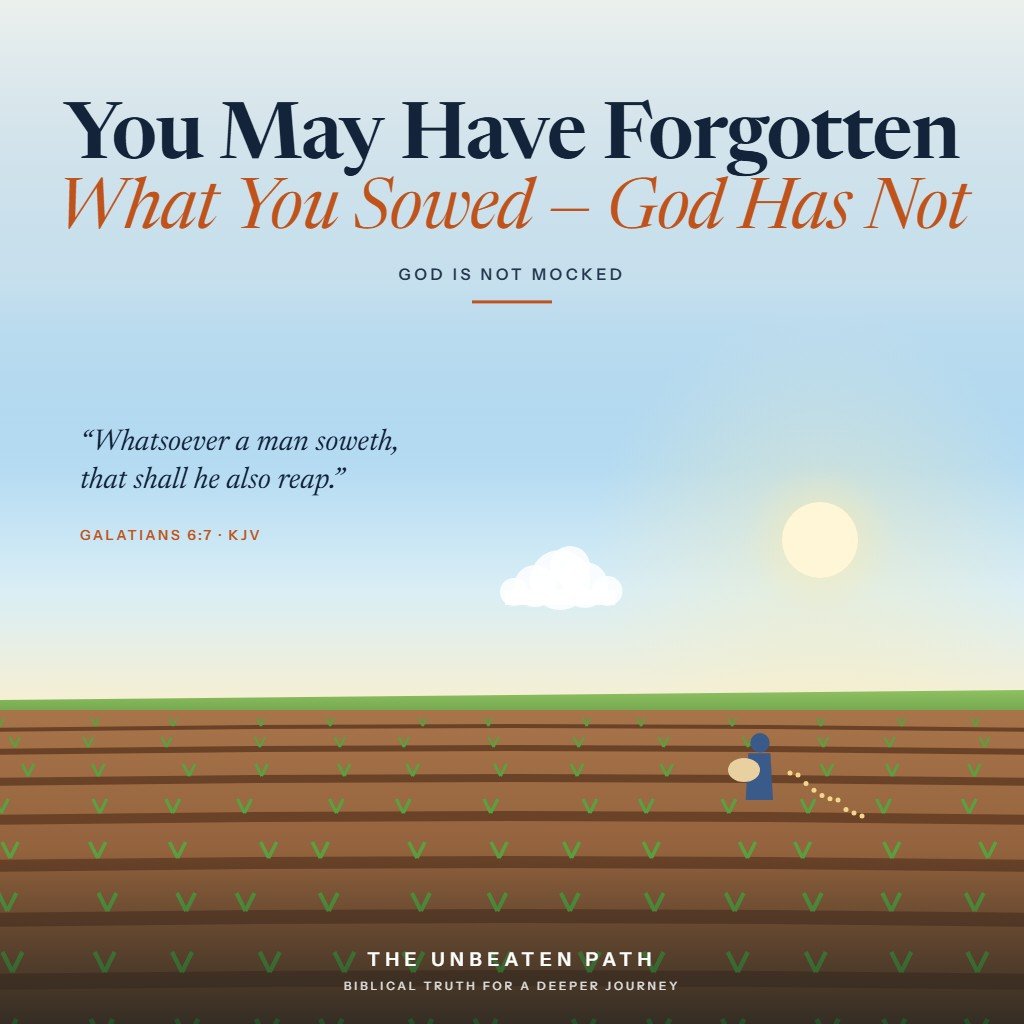
Do not be deceived: God is not to be mocked. Whatever a man sows, he will reap in return. The one who sows to please his flesh, from the flesh, will reap destruction, but the one who sows to please the Spirit, from the Spirit, will reap eternal life.
Galatians 6:7
We cannot get something out of nothing, as there is always a cost to everything. This principle is also true with GOD, as He promises we will surely reap what we sow. If we sow nothing, then naturally, we will reap nothing. Similarly, if we sow in abundance, we will reap in abundance. Just as we sow in worldly things, we will reap the world. When we sow spiritually, we will reap the blessings of GOD. It is impossible to sow in earthly things and reap the blessings of GOD. Therefore, many are foolish to expect to reap from GOD without first sowing spiritually. They pray without ceasing what they hope from Him, but to no avail. Their prayers seem to fall on deaf ears, far from Jesus's promise that He will do anything asked in His name. The reason is His Words have also fallen on deaf ears. We sow nothing of GOD, and we reap nothing from Him. GOD's position is simple: those who listen to Him belong to Him. GOD has no obligation to those who do not belong to Him, those unwilling to sacrifice themselves to listen to Him.
And I will do whatever you ask in My name, so that the Father may be glorified in the Son. I will do it if you ask Me for anything in My name.
John 14:13–14
GOD begins a new chapter of humanity after the fall of Adam and Eve with the offering of Cain and Abel. GOD chose the brothers' offering above everything He could highlight, making it the most important thing to note. Those who cannot understand its significance will miss out on His blessing. Cain, a tiller of the soil, and Abel, a keeper of sheep, brought their gifts to GOD. The Bible did not state the reason for the gift, as it was unprecedented during the time of Adam and Eve when they were in the Garden of Eden. Since Cain and Abel are the first generations of people who had to toil for a living, we can assume that it must be related to seeking GOD's blessings for a successful harvest in their toils on the cursed ground. GOD cursed the ground when Adam and Eve disobeyed; therefore, the ground would yield inedible thorns and thistles rather than plants for food, making life extremely tough.
Every good and perfect gift is from above, coming down from the Father of the heavenly lights, with whom there is no change or shifting shadow.
James 1:17
From being able to eat fruit from every tree, Cain and Abel eat the plants of the field. They are denied the sweetness of fruits instead, given the blandness of plants. Anything good and perfect is a gift of GOD, and if GOD did not have mercy on the brothers and show them kindness, their lives could be unbearable. Therefore, getting into the good books of GOD and getting His favour was paramount for them. If that were not true, Cain would not have gotten into a rage when his gift was rejected, resulting in Abel being killed. Abel's gift undermined Cain's, causing Cain's gift to be rejected. Cain's reaction was more than a case of jealousy as he understood the consequences of the rejection. Not being good enough was not an option but a threat to his survival. When there is competition, there is comparison. Since Abel was the competitor and the cause of the comparison, Cain had to get rid of him so there would be no more comparison.
He told him, "You may eat the fruit of any tree in the garden,
Genesis 2:16
Both thorns and thistles will yield for you, and you will eat the plants of the field.
Genesis 3:18
Cain brought a fruit offering before GOD, while Abel presented a meat offering. Abel's gift pleased God and was accepted, while Cain's gift displeased Him and was rejected. It is not true, as some might assume, that GOD likes blood and prefers meat offerings to fruit offerings. Therefore, Abel's gift was accepted, and Cain's was rejected. Unlike a man, GOD sees beyond the gifts to a man's heart. In other words, He sees the heart behind the gift as He can weigh the heart matter. GOD is not a beggar who is contented with any gifts as long as we are willing to give. He only accepts heartfelt gifts to express our love and gratitude. Anything lesser than that will be rejected, like Cain's gift. If the gift is filled with our love, no matter how worthless it may seem, GOD will accept it with fondness of His heart. Like the two copper coins of the poor widow, GOD did not despise. The heart makes a significant difference to the gift and not the value of it.
Now Abel was a keeper of sheep, while Cain was a tiller of the soil. So, over time, Cain brought some of the fruit of the soil as an offering to the LORD, while Abel brought the best portions of the firstborn of his flock. And the LORD looked with favour on Abel and his offering, but He had no regard for Cain. So Cain became very angry, and his countenance fell.
Genesis 4:2–5
What is so special about Abel's gift that makes it better than Cain's? Since GOD looks at the heart, Abel's gift must be heart-filled with love for GOD, while Cain's did not. Therefore, God looked favourably on Abel and his offering and did not regard Cain's gift. Abel gave the best portions of the firstborn of his flock, while Cain brought some of the fruit of the soil as an offering. In other words, Abel gave the best of what He had, and Cain gave what he had. There can be only one best. When Abel gave the best to GOD, he forfeited himself of the best. When Cain gave what he had, he likely kept the best for himself and gave the leftovers to GOD. Therefore, GOD had an issue with his gift. If Cain had given GOD his best, as Abel did, would GOD not have accepted his gift? To Abel, GOD deserved the best, but to Cain, he deserved the best himself. Therefore, Abel put GOD before himself, while Cain put himself before GOD.
If anyone comes to Me and does not hate his father and mother and wife and children and brothers and sisters—yes, even his own life—he cannot be My disciple.
Luke 14:26
When Cain put himself above GOD by keeping the best for himself, he was not worthy of GOD. Likewise, anyone who loves himself above GOD is not worthy of Him. A fruit is a fruit regardless of whether it is bigger or smaller. We might think GOD will not squabble over such matters, but He does. When Abel gave GOD the best portion of his flocks, he sacrificed himself for GOD, making his gift a sacrifice. Cain's gift to GOD was not a sacrifice because he gave GOD some of the many he had, making his gift an offering. It is like a person with many apples as an analogy. When he gives some apples away, he still has many apples left. He was not denied of any apple. When Abel gives GOD the best, it is like a person with one apple. When he gives that apple away, he will have none because the rest are not the best. The difference between Cain and Abel's gifts is one is an offering while the other is a sacrifice. GOD accepted the sacrifice and rejected the offering.
No," replied the king, "I insist on paying a price, for I will not offer to the LORD my God burnt offerings that cost me nothing.
2 Samuel 24:24
David sinned against GOD and needed to build an altar on the threshing floor of Araunah the Jebusite to offer burnt offerings and peace offerings to stop the plague. Arauah offered the land and the oxen for a burnt offering and the threshing sledges and ox yokes for the wood free for David's use. David did not accept the offer because he did not want to give GOD something that cost him nothing. When we stand before GOD, He looks beyond our offerings to the heart behind them. If David had not let GOD see his sincerity and repentance, GOD might not have stopped the plague. Then, more people would have died for David's sin. No one knows how much a sacrifice is enough for GOD. It all depends on our hearts because it is not a measurement of the value of the gift but the heart. GOD wants to know how much He is worth to us, and from our gifts, He will know.
The king went to Gibeon to sacrifice, for it was the great high place. Solomon offered a thousand burnt offerings on the altar there.
1 Kings 3:4
King Solomon offered a sacrifice of 22,000 oxen and 120,000 sheep. So the king and all the people dedicated the house of God.
2 Chronicles 7:5
GOD appeared to Solomon in his dreams twice, and they happened after substantial offerings that took days to burn. In the first dream, GOD gave Solomon a blank cheque: "Ask, and I will give it to you!" GOD was pleased with Solomon's answer and gave him a wise and discerning heart so that there would never be nor will ever be another like him. In the second dream, GOD promised His devotion to the temple Solomon built for Him. It would be a place of answered prayers as long as His people humble themselves, turn from their wicked ways, seek His face, and pray. GOD chose the temple to make it a house of sacrifice. Of all the terms that GOD could use to describe the temple, like the house of praise, house of thanksgiving or house of love, He chose the house of sacrifice. The message is unmistakable: If we want prayers answered, we must sacrifice. Solomon's sacrifices overwhelmed GOD so much that He promised to put His Name there forever. His eyes and His heart would be there for all time.
As the Father has loved Me, so have I loved you. Remain in My love. If you keep My commandments, you will remain in My love, just as I have kept My Father's commandments and remain in His love. I have told you these things so that My joy may be in you and your joy may be complete.
John 15:9–11
GOD wants us to prove our love for Him through our sacrifices. In return for our love, He will answer our prayers. Jesus said, "If you remain in Me and My words remain in you, ask whatever you wish, and it will be done for you." Those who remain in Jesus have denied themselves and picked up their crosses to follow Him. In other words, they are the ones who have sacrificed themselves for Him. In return, Jesus gives them a blank cheque, like Solomon, to ask whatever they wish, and it will be done for them. Likewise, GOD's love for Jesus was not free; it was not that He was the Son of GOD, but He earned it by sacrificing for the kingdom of GOD. By Jesus's sacrifice, GOD saw the love of His Son. In return, the Father reciprocates the Son's love with His love. Hence, Jesus states, "The reason the Father loves Me is that I lay down My life to take it up again." Likewise, we love GOD because He first loves us and will sacrifice for us. And to reciprocate His love, we are willing to sacrifice ourselves, too. Those unwilling to sacrifice for Him do not love Him.
We love because He first loved us.
1 John 4:19
You believe that God is one. Good for you! Even the demons believe that—and shudder.
James 2:19
The ultimate question GOD wants to know is not what we have to offer Him but what we can sacrifice for Him. GOD loves us and has prepared a VIP access card to heaven. Only those who love Him and are willing to sacrifice for Him will be given. Those who believe in Him but do not love Him are no different from the demons because they also believe in Him- and shudder. Let us more than believe in Him but love Him by our willingness to sacrifice for Him.
“I will not offer to the LORD my God burnt offerings that cost me nothing.”
2 Samuel 24:24 · KJV
Questions to carry with you
Take one question into your prayer time, or work through them together in a small group or Bible study.
- Am I giving God my best, or what is left over?
- What would a gift that costs me something look like this week?
- Is my giving an offering or a sacrifice?
Where this essay leads
People in this essay
The same Scripture, explored elsewhere
- Galatians 6:7also in You Did No Harm. Did You Do Good?, The Prayer That Does Not Avail Much, You May Have Forgotten What You Sowed—God Has Not
- James 1:17also in The Serpent Is Not an Uninvited Guest in the Garden of Eden: Understanding God’s Divine Plan Through Temptation, What You Sow on Earth, You Reap from Heaven
- Genesis 2:16also in Blessing or Curse: The Choice in Obedience, You Know God Forgives. Have You Forgotten He Judges?
- John 14:13also in The Prayer That Does Not Avail Much