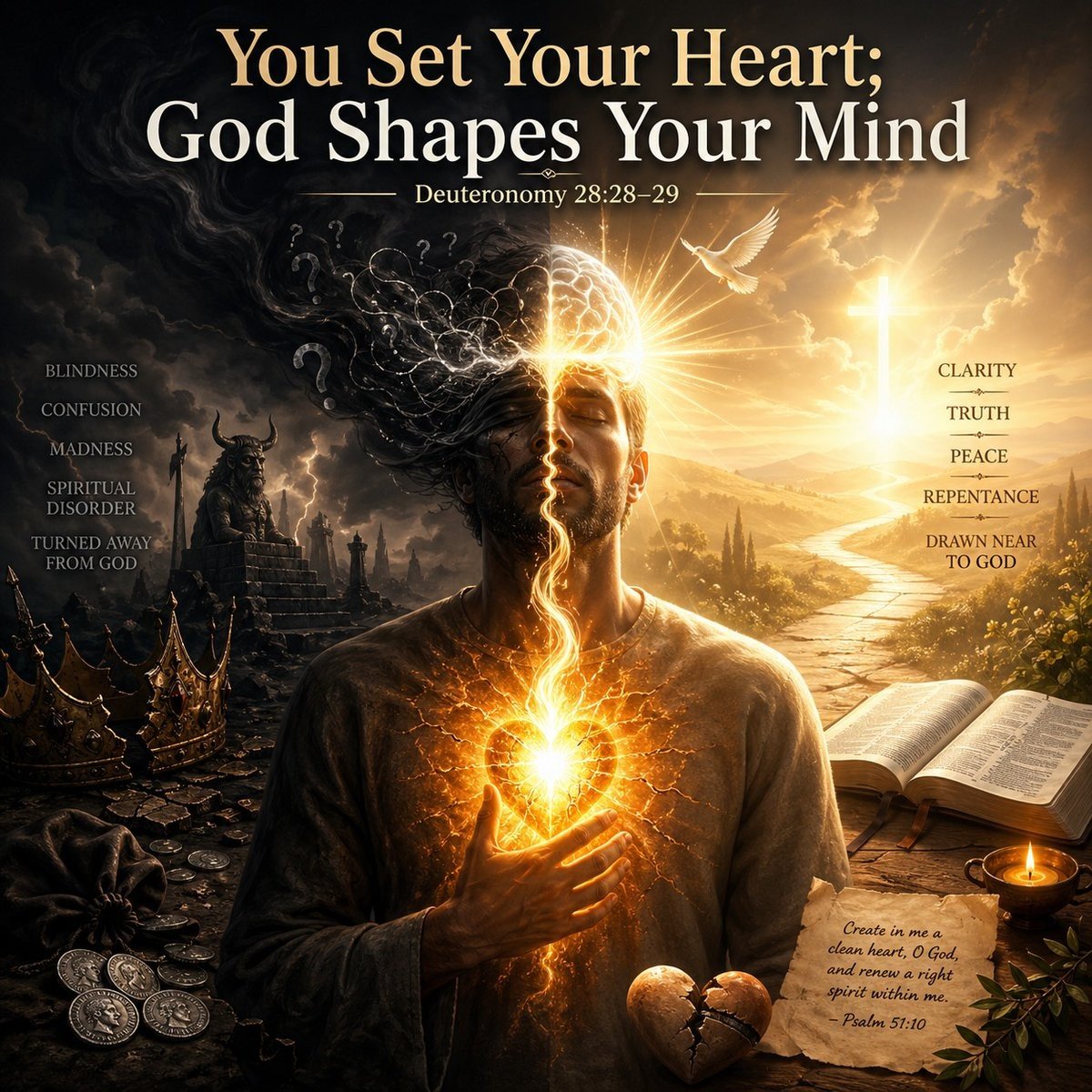
Madness, Blindness, and Confusion of Mind
The LORD will afflict you with madness, blindness, and confusion of mind, and at noon you will grope about like a blind man in the darkness. Deuteronomy 28:28-29
Education Cannot Guarantee Wisdom
The modern world has advanced largely through education. Education is one of the most powerful forces shaping society because it transmits knowledge, develops skills, and expands human understanding. Through education, economies grow, leaders emerge, and civilisations progress. This is why parents labour to send their children to the best schools, believing that a stronger education will produce a stronger mind, and a stronger mind will lead to a better life. Beneath this pursuit lies a deeper assumption: that knowledge and intellect naturally lead to wisdom.
Yet Scripture challenges this assumption at its root. The Bible distinguishes between knowledge and wisdom, and between intellect and obedience. A man may be educated and still live foolishly; he may possess understanding and still destroy himself. Solomon proves this. He was granted wisdom greater than any man of his time, yet wisdom did not protect him when his heart turned away from God. If wisdom alone could preserve a man, Solomon would never have fallen. This reveals a deeper order: the mind does not govern the man as the world assumes. Scripture teaches that the heart shapes the mind, and the mind shapes the man. God does not begin by informing the mind; He begins by captivating the heart.
Whatever the heart chooses, the mind learns to rationalise, and whatever captures the heart commands the mind.
Solomon: Wisdom Cannot Govern a Wandering Heart
The heart is the foundation of our commitments, while the mind serves as the tool that supports them. We can see this principle illustrated in the life of Solomon. God was pleased with Solomon when he asked for wisdom to govern God’s people well, rather than pursuing selfish desires for long life, wealth, or the demise of his enemies. Solomon’s heart was focused on God’s purpose, and he approached with humility, responsibility, and dependence. Because his heart was aligned with this purpose, wisdom flowed to him clearly. This wisdom is evident in resolving a dispute between two women claiming the same child, where it was proposed to cut the baby in half. Without DNA testing, Solomon understood a mother’s heart, allowing him to judge wisely.
Once Solomon’s heart shifted, his wisdom devolved into foolishness. The scripture states, “His wives turned away his heart.” They didn’t overpower his intellect; rather, they redirected his affections. They didn’t conquer his reason; instead, they captivated his feelings, ultimately leading him to act against his own wisdom.
This distinction is important. Biblically, the heart is viewed as the seat of love, desire, loyalty, and worship, while the mind often serves the interests of what the heart loves. Solomon did not lose his wisdom before losing his way; instead, he lost his heart, which led wisdom to lose its authority over his mind.
This illustrates a key difference between God’s perspective and the world’s: true wisdom is not the product of information, but of formation; not merely of intellect, but of rightly ordered affection; not merely of knowledge, but of unwavering allegiance to God.
David and Solomon: Dependence Shapes the Heart Differently
Solomon’s relationship with God was very different from that of his father, David. David’s love for God was shaped by hardship long before he became king. While in the wilderness, hiding in caves, and facing persecution, David learned to seek God not just for wisdom, but for survival, guidance, and communion. His trust in God was built through a deep sense of dependence.
In contrast, Solomon was born into a time of peace, privilege, and inheritance. He knew God as the God of his father and ancestors, and while he understood enough about God to ask for wisdom, his love for God had not been tested through the same trials of dependence. He approached God correctly, but over time, it became clear that his heart was not truly rooted in God.
God explicitly warned the kings of Israel not to multiply wives, horses, or wealth. They were meant to rely on divine protection rather than personal power or political security. However, Solomon violated all three prohibitions: he amassed large herds of horses from Egypt, took 1,000 wives and concubines, and accumulated vast wealth, leading him to turn away from complete dependence on God.
Why did this happen? Because wisdom cannot govern a heart that seeks its own interests. Solomon’s kingdom expanded, his wealth grew, and his political alliances multiplied through marriage. What began as a strategic move soon turned into a compromise. To appease his wives, Solomon built high places for foreign gods, and what was once forbidden gradually became acceptable.
This was not simply a loss of intelligence, but a corruption of judgment. As his affections shifted, so did his reasoning. Once his heart became divided, his mind followed suit. For whatever the heart desires, the mind will always find a way to justify.
A Brilliant Mind Cannot Protect a Divided Heart
The story of Solomon reveals a profound truth: a brilliant mind cannot protect a wandering heart. The heart is the seat of allegiance, and the mind often becomes the servant of what the heart loves. A surrendered heart keeps the mind aligned with God’s wisdom, but a divided heart teaches the mind to defend compromise. In Scripture, disobedience is rarely an information problem; it is usually an affection problem. Once love moves, logic rearranges itself to defend it. And God shapes the condition of the mind according to how man sets the heart’s direction. When the heart departs from God, clarity gives way to confusion, wisdom gives way to folly, and decisions meant for gain become instruments of ruin. That’s when man is afflicted with madness, blindness, or confusion of mind.
This is why idols are so dangerous. They do not initially attack our beliefs; they redirect our love. Solomon didn’t start by outright rejecting God. Instead, he allowed lesser loves to coexist with God, until what was once forbidden became acceptable, and what was once unthinkable became reasonable.
Saul: Fear Can Darken Judgment
Another biblical character who reveals how the heart affects the mind is Saul, the first king of Israel. In Samuel’s farewell address, Israel was told, “Above all, fear the Lord and serve Him faithfully with all your heart.” This instruction was not merely about outward duty, but inward surrender. To serve God, a man must first give Him the heart. Before the hands obey, the heart must belong. Saul’s tragedy was that he served as king, but his heart was never wholly surrendered to God.
Unlike Solomon, Saul was not marked by extraordinary wisdom, but the Spirit of God anointed him to rule Israel. Yet his obedience was partial and self-directed. He offered unlawful sacrifices when fear overcame trust. He spared the Amalekite king and the best livestock when God had commanded destruction. Later, when God was silent, he sought guidance through the medium at Endor. In each case, Saul did not simply make mistakes; he rejected God’s word whenever obedience threatened his control. Therefore, God rejected him as king, and the Spirit of the Lord departed from him. From that point onward, Saul’s mind began to darken. He became blind to his own rebellion, mad in his jealousy, and confused in his judgment. He saw David as the enemy, though David was not against him. He clung to a throne God had already taken from him. He sought spiritual guidance from darkness because he could no longer hear from God. Saul’s life shows what happens when a man wants God’s position, God’s blessing, and God’s authority, but not God’s rule over his heart.
The story of Saul reveals another side of the same truth: a heart ruled by fear cannot think clearly before God. Saul’s ruin did not begin with madness; it began with a heart that feared losing control more than it feared disobeying God. Because his heart was insecure, his mind became suspicious. Because his heart was self-preserving, his mind became defensive. Because his heart resisted surrender, his mind could no longer recognise God’s correction as mercy. He saw David as a threat when, in fact, David was God’s instrument. He saw obedience as too costly, so he called partial obedience acceptable. He saw silence from God not as a reason to repent, but as a reason to seek forbidden guidance. This is the madness, blindness, and confusion of mind that follows a heart unwilling to yield. When a man refuses God’s rule over his heart, even his reasoning begins to serve his rebellion. Saul did not merely lose his throne; he lost the ability to judge himself truthfully before God.
David: A Correctable Heart Can Recover Clarity
Solomon and Saul’s stories reveal the hearts that could not find their strength in God and therefore sinned against God. David’s heart is unlike theirs. David’s heart will humble before God and lead him to seek forgiveness. Therefore, the story of David reveals God’s mercy toward a heart that still knows how to return. Unlike Solomon, whose affections drifted, and Saul, whose fears hardened into rebellion, David’s heart remained deeply responsive to God. Though his sin with Bathsheba was grievous, his mind was not left to defend it when confronted by the truth.
When the prophet Nathan confronted David over his adultery and the murder, David did not defend himself, rationalise his actions, or shift blame. He immediately confessed, “I have sinned against the Lord.” Later, in Psalm 51, he described the sacrifice God desires as “a broken and contrite heart.” This is what set David apart. David shows that the shaping of the mind is not seen in a life without failure, but in a heart that remains correctable. Repentance restores what rebellion distorts. When the heart returns to God, the mind is brought back under truth, and what was once clouded by desire becomes clear again under grace.
David’s repentance did not erase the consequences of his sin. The sword remained in his house, and disorder entered his family. This is significant because God’s mercy does not always eliminate the damage caused by sin. However, God did restore David’s moral clarity. Before Nathan confronted him, David had mistaken desire for love, concealment for wisdom, and power for protection. After repenting, he began to see his sin as God saw it. While his life was not reset, his understanding was reordered. This highlights the difference between Saul and David: Saul lost the ability to judge himself honestly, while David allowed God to judge him, enabling him to become true again.
Judas: Truth Cannot Save an Unsurrendered Heart
Judas reveals perhaps the most sobering truth of all: even walking closely with Christ cannot save a heart that remains unsurrendered to Him. Unlike Solomon, who drifted through divided affections, or Saul, who hardened through fear, Judas walked beside Truth Himself and still perished because his heart belonged elsewhere.
The tragedy of Judas was not that he lacked truth, but that he valued something else more. Scripture tells us that he kept the money bag and helped himself to what was put into it. Long before the thirty pieces of silver, his heart had already been shaped by the love of money. When Mary poured costly perfume upon Jesus, Judas objected, not because he cared for the poor, but because his heart measured worth differently. This is the nature of the heart: it does not simply choose between good and evil; it ranks what it loves most. Whatever sits highest becomes its treasure, and where treasure sits, the heart follows. In the end, Judas did not betray Christ because he suddenly became evil. He betrayed Christ because what he valued most had already claimed his heart. Once money sat on the throne of his affections, his mind found a way to make betrayal reasonable.
Judas reveals the terror of an unsurrendered heart in a religious life. He was close to Christ in position, but far from Him in affection. His mind heard truth daily, but his heart treasured something else. This is why knowledge alone could not save him. Truth may enter the ears, but if the heart gives highest value to another treasure, the mind will eventually serve that treasure. Judas did not lack exposure to light; he lacked surrender to it. His betrayal shows that the heart can stand near holiness and remain loyal to sin. Once money became his treasure, his mind found a way to justify selling the One he called Master.
Paul: The Mind Is Never Neutral
Paul brings doctrinal clarity to what the lives of Solomon, Saul, David, and Judas reveal through experience: man does not possess a neutral mind. In Romans, Paul teaches that the mind is always governed by one of two powers, the flesh or the Spirit. The fleshly mind is hostile to God, unable to submit to His law, and its end is death. The spiritual mind, however, is governed by God and produces life and peace. This explains the deeper reality behind every story we have seen. Solomon’s divided affections gave place to a flesh-governed mind that justified compromise. Saul’s fear and pride hardened into a mind that resisted truth. David’s repentance restored his mind under God’s truth, while Judas’ love of money gave his mind over to betrayal. Paul makes clear that the mind does not rule itself; it serves whatever governs the heart. If the heart is surrendered to the flesh, the mind will find reasons for rebellion. But if the heart is surrendered to God, the Spirit shapes the mind into truth, peace, and life.
What Rules the Heart Shapes the Mind
The heart does not merely choose between good and evil; it ranks what it loves most, and whatever sits highest will govern everything beneath it. This is the lesson woven through the lives of Solomon, Saul, David, and Judas. Solomon placed lesser loves beside God, and wisdom became compromised. Saul placed his throne above God, and fear consumed his judgment. David, though fallen, returned because his heart still knew where it belonged. Judas stood beside Christ, yet sold Him because another treasure sat higher in his heart. Though their stories differ, the principle remains the same: what rules the heart will eventually shape the mind.
Scripture as a Mirror of the Heart
This is why identifying ourselves in Scripture matters. These are not merely stories of ancient kings and disciples; they are mirrors held before our own souls. Some of us are like Solomon, slowly allowing compromise to become reasonable. Some are like Saul, clinging to control while resisting surrender. Some are like David, broken but still able to return. Some, perhaps most dangerously, are like Judas, outwardly near to Christ while inwardly treasuring something else. The question is not whether we have a heart, but what holds it.
For the heart does not love randomly. It gives itself to what it values most, trusts most, fears losing most, and builds life around. Whatever becomes our treasure becomes our master. And wherever our treasure sits, the mind will follow to defend it. If God sits highest, the Spirit shapes the mind into truth, life, and peace. But if something else takes His place, clarity gives way to blindness, wisdom gives way to folly, and the mind becomes an instrument of ruin. Therefore, the greatest question of life is not how strong the mind is, but who sits on the throne of the heart. For you set your heart, and God shapes your mind. #Mind #Heart #HolySpirit #Truth
Related Ideas
What Rules the Heart Shapes the Mind — What the heart loves, treasures, fears losing, and refuses to surrender eventually influences how the mind interprets truth. A heart ordered under God gives the mind clarity; a divided heart teaches the mind to justify compromise.
The Voice We Obey — repeated obedience gives increasing authority to the desire, fear, pride, or truth that the heart has chosen to trust.
Strength Can Hide Spiritual Drift — intelligence, experience, success, and position cannot keep the mind clear when dependence on God is quietly being replaced by self-confidence.
Surrender — spiritual clarity requires more than information; the heart must yield its loves, fears, control, and loyalties to God.
Connected Ideas
Heart · Mind · Affection · Wisdom · Discernment · Idolatry · Fear · Repentance · Surrender · Flesh and Spirit
Originally published on X on 2026-04-29. This website edition preserves the original essay while adding structural headings and knowledge links.
Scripture index
Deuteronomy 28:28–29; Deuteronomy 17:16–17; 1 Kings 3:5–28; 1 Kings 11:1–10; 1 Samuel 12:24; 1 Samuel 13:8–14; 1 Samuel 15:22–23; 1 Samuel 16:14; 1 Samuel 28:6–20; 2 Samuel 12:1–13; Psalm 51:17; John 12:3–6; Matthew 26:14–16; Romans 8:5–8