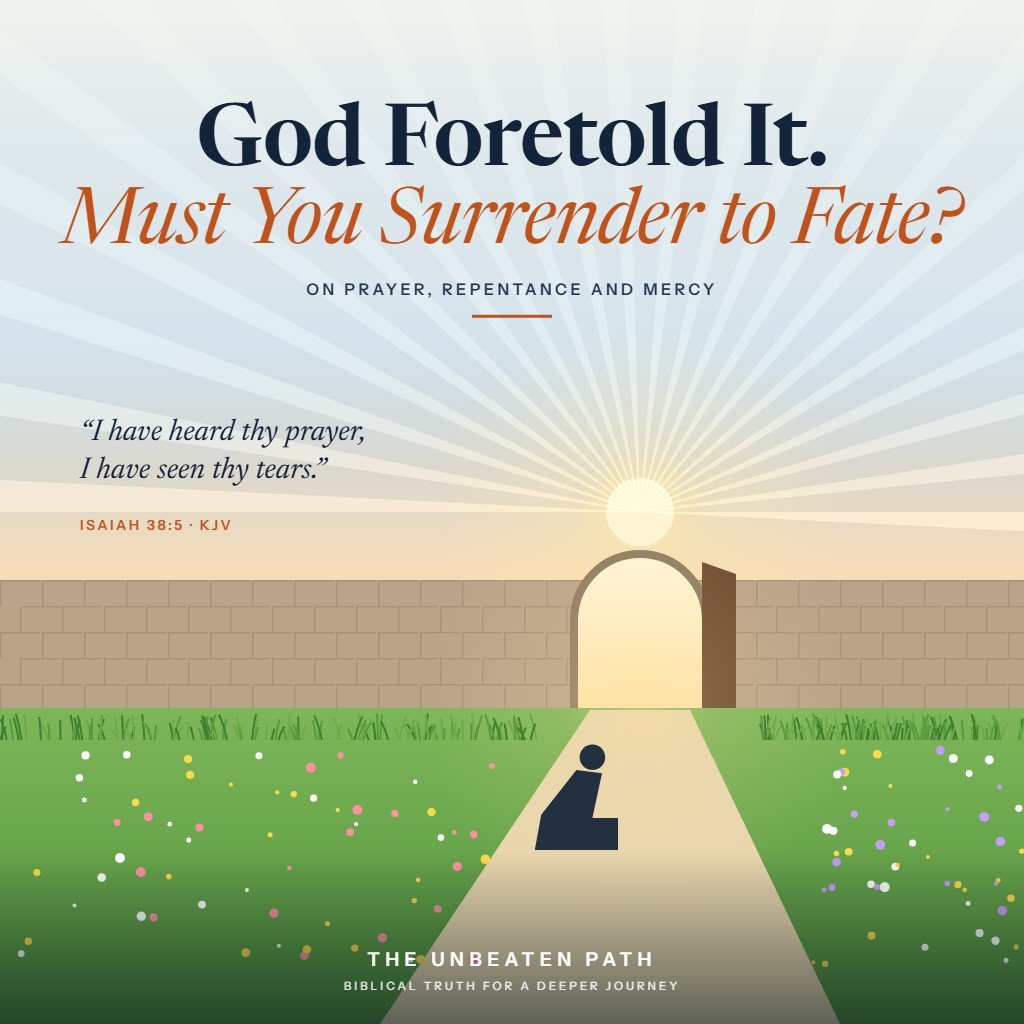
“I have heard thy prayer, I have seen thy tears.” (Isaiah 38:5)
When God gives news we dread, it can feel as if all that is left is to resign ourselves to fate.
But His warnings are not sentences. They call us to respond.
Pray
Told he would die, Hezekiah wept and prayed, and God added fifteen years to his life. (2 Kings 20:4–6)
Jesus asked that the cup might pass from Him, and then yielded to the Father’s will. (Matthew 26:39) Prayer is not defiance.
Turn
Nineveh had no promise of mercy, only forty days. The people turned from their violence, and God withheld the disaster He had announced. (Jonah 3:4–10)
Watch
Peter was told he would fall, and he was also told to watch and pray. A foretold failure does not cancel the command to resist. (Matthew 26:41)
Return
Peter wept bitterly and was restored. Paul, who called himself the worst of sinners, received mercy as an example for all who would believe. (1 Timothy 1:15–16)
God warns us not because He wants us to fall, but so that we will stand. (1 Corinthians 10:13)
Questions for Reflection
- What news have I quietly called my fate and stopped bringing to God?
- Is God calling me to pray, to turn from something, or to watch where I am weak?
- Whom have I hurt, and what would returning and repair look like?
Related Essays
God Foretold It. Must You Surrender to Fate? — When God foretells death, destruction, denial or betrayal, must we resign ourselves to fate? Hezekiah, Nineveh, Peter and Judas show that God’s warnings call us to pray, repent and return, not to surrender.
Connected Ideas
Prayer · Repentance · Mercy · Warning · Restoration