“I will ascend… I will raise my throne… I will make myself like the Most High.” (Isaiah 14:13–14)
Five times “I will.”
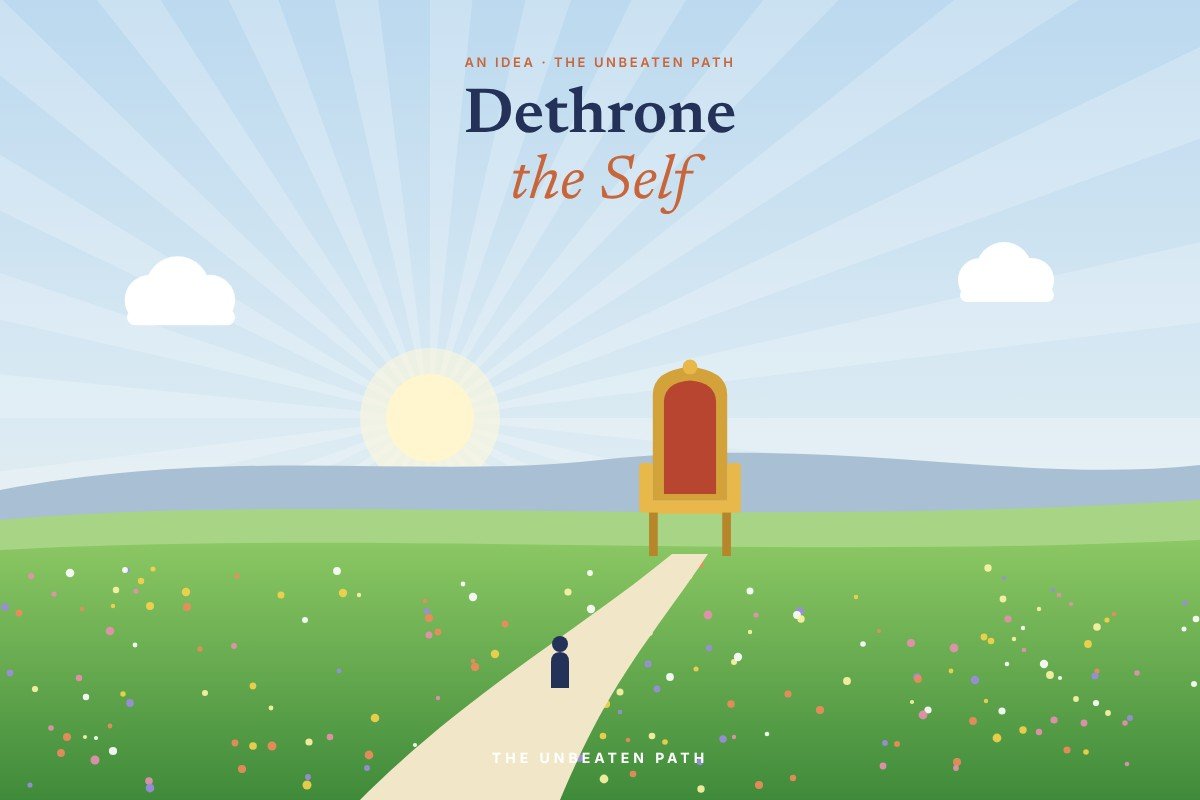
Pride began with a self that wanted the centre.
The disciples too
James and John asked for the seats at Jesus' right and left. The other ten were indignant. (Matthew 20:20–24)
All twelve wanted the throne.
The “I” lives in all of us.
Outside and inside
The Ten Commandments restrain our actions.
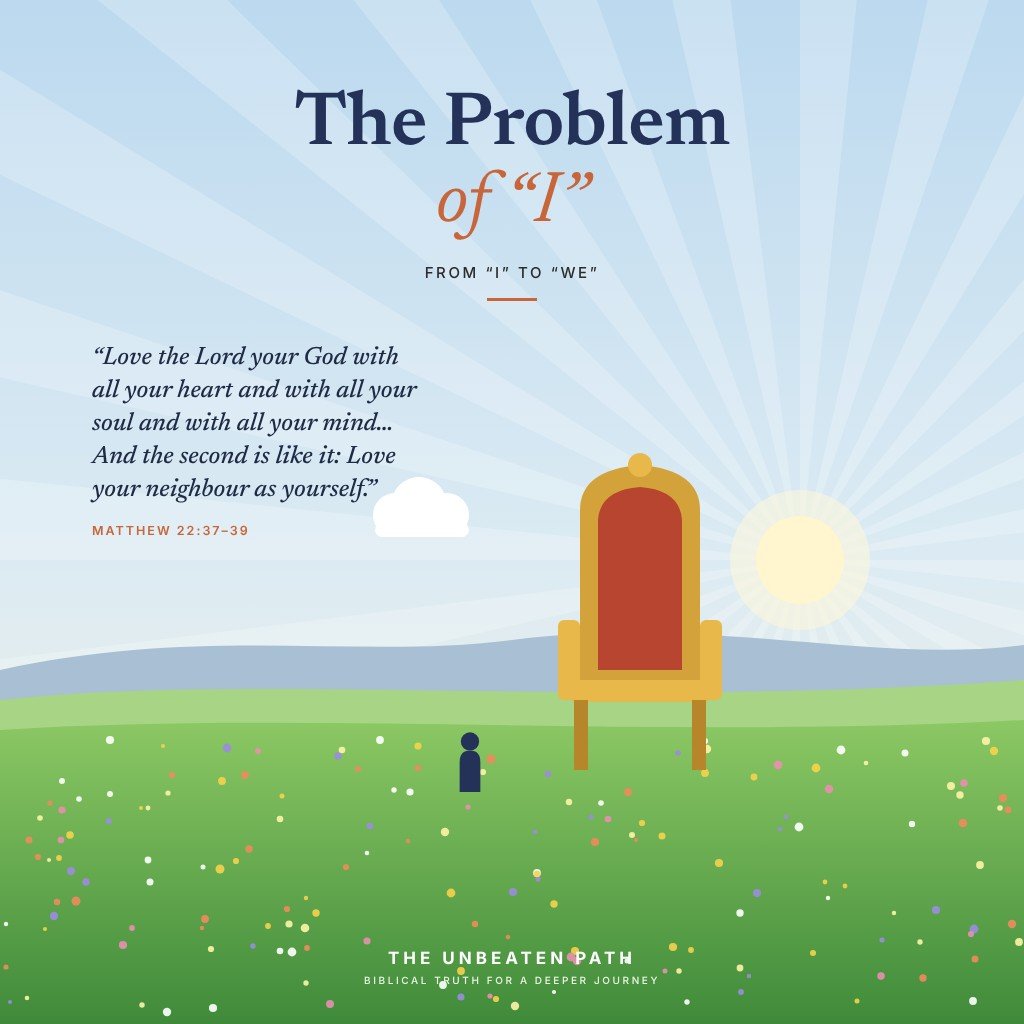
The two greatest commandments reach the heart: love God with everything, and love your neighbour as yourself. (Matthew 22:37–40)
First the outside of the cup is cleaned; then the inside. (Matthew 23:26)
From “I” to “we”
When the right hand gives without the left hand knowing (Matthew 6:3–4), the self is no longer the audience.
God Himself is Father, Son and Spirit — perfect love shared, not grasped.
To the one who overcomes, Jesus offers a seat with Him on His throne (Revelation 3:21) — not the throne we seize, but the one He gives.
Questions for Reflection
- Where is “I will” ruling my decisions?
- Do my good deeds secretly seek an audience?
- Who is my neighbour this week, and how can I put them before myself?
Related Essays
The Problem of “I” — Satan fell saying “I will.” The disciples argued over thrones. Why the self at the centre is the root of sin, and how the two greatest commandments dethrone it.
Connected Ideas
Pride · Self-Denial · The Greatest Commandments · Humility · Love