Core ideaThe existence of suffering does not mean that God is absent or unjust. Scripture distinguishes suffering from personal punishment, acknowledges the consequences of human freedom and a fallen world, and teaches that God can redeem evil without being its author. Present circumstances are not the final measure of His justice; faith trusts God even when it cannot yet understand what He allows.
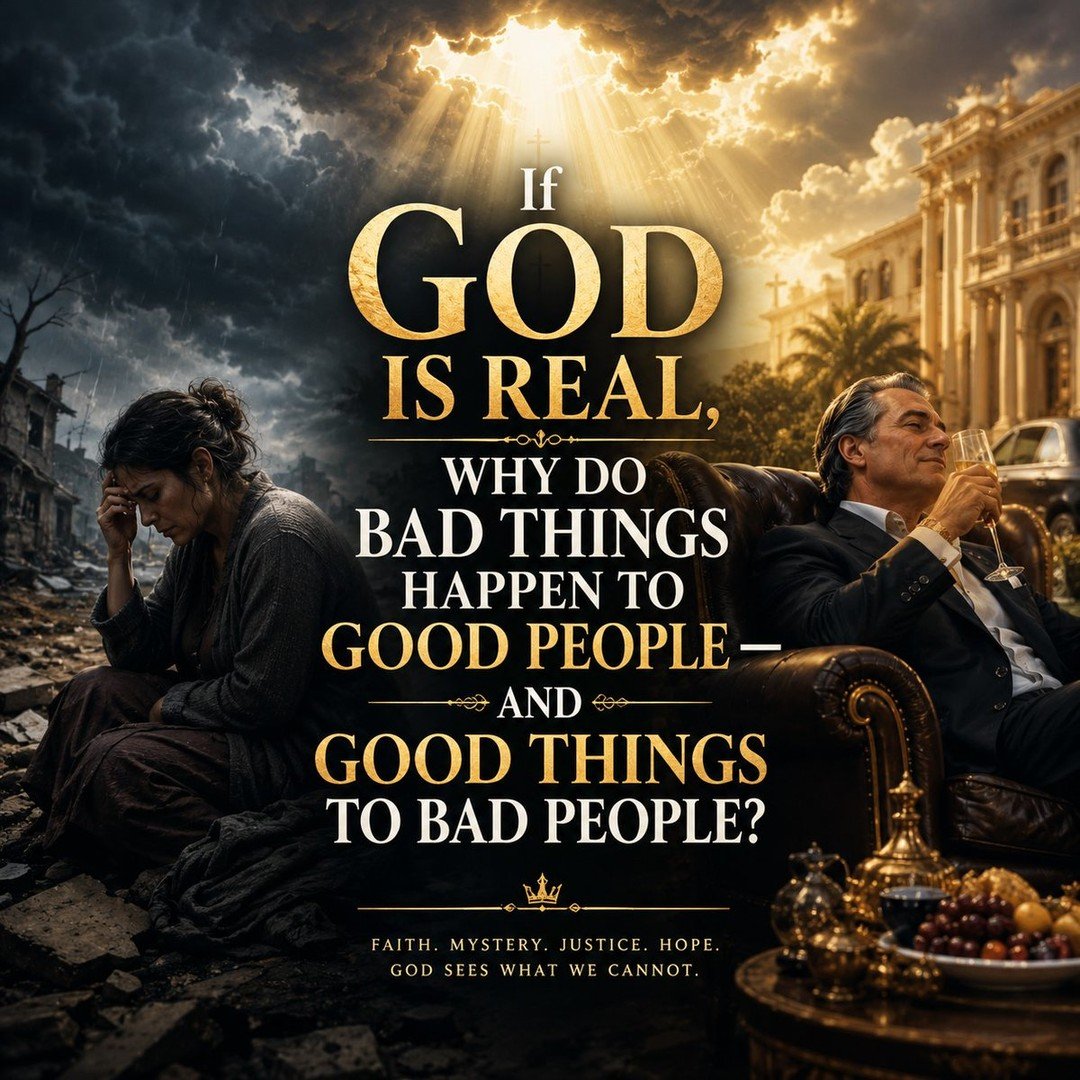
One of the oldest and most painful questions in human history is this: If God is real, why do bad things happen to good people? And just as troubling is the reverse question: Why do good things happen to bad people? Why does a kind mother suffer from cancer while a corrupt man grows rich? Why does an honest worker lose everything while a dishonest person rises in power? Why do children suffer, wars continue, families break apart, and the wicked sometimes appear to live comfortably?
A Question Born from Pain
This question is not merely philosophical. It is deeply personal. People do not usually ask it from a classroom. They ask it beside a hospital bed, at a funeral, after betrayal, during financial ruin, or in the silence of unanswered prayer. It is a question born from pain.
The Bible does not ignore this question. In fact, Scripture faces it directly. Job was a righteous man, yet he lost his wealth, his children, and his health. Joseph was betrayed by his brothers and imprisoned unfairly. David was hunted though he was chosen by God. Jeremiah suffered for speaking truth. The apostles were persecuted for preaching Christ. And above all, Jesus Christ, the only truly sinless man, was rejected, tortured, and crucified.
So Christianity does not teach that good people will never suffer. It teaches something deeper: suffering is real, evil is real, injustice is real — but God is still real, sovereign, just, and good.
A Fallen World Is Not an Absent God
The first mistake many people make is assuming that if God exists, life should be immediately fair. But the Bible teaches that the world we live in is not the world as God originally designed it to be. Human sin has damaged creation. From the fall of man in Genesis, disorder entered the world: death, sickness, violence, greed, betrayal, and pain. The world is not broken because God is absent. The world is broken because mankind has turned away from God.
Suffering Is Not Always Punishment
This does not mean every suffering person is being punished for a specific sin. Jesus rejected that simplistic idea. In John 9, when the disciples saw a man born blind, they asked whether the man or his parents had sinned. Jesus answered that his blindness was not the result of a specific personal sin, but that the works of God might be revealed in him. This teaches us an important truth: suffering is not always punishment. Sometimes suffering becomes the stage on which God reveals mercy, strength, faith, and redemption.
Yet the question remains: why does God allow suffering at all?
Human Freedom and the Reality of Evil
Part of the answer lies in human freedom. God did not create human beings as machines. He gave mankind the ability to choose, to love, to obey, and also to rebel. Real love requires real freedom. But freedom also opens the door to evil choices. A man may use his freedom to care for the weak, or he may use it to exploit them. A ruler may govern justly, or he may oppress. A person may speak truth, or he may deceive. Much of the suffering in this world comes not because God is cruel, but because human beings misuse the freedom God has given.
God Can Redeem What He Does Not Prevent
But God’s allowance of human freedom does not mean God has lost control. The Bible shows that God can work even through evil circumstances without being the author of evil. Joseph’s story is a powerful example. His brothers sold him into slavery, yet years later Joseph said, “You meant evil against me, but God meant it for good” (Genesis 50:20). The evil was real. The betrayal was real. The pain was real. But God’s purpose was also real.
This is one of the deepest truths of faith: God does not always prevent suffering, but He can redeem suffering.
When the Wicked Prosper
Still, many people struggle when they see bad people prosper. This troubled the psalmist Asaph in Psalm 73. He looked at the wicked and saw that they seemed healthy, wealthy, proud, and free from trouble. He nearly lost faith because life looked unfair. But then he entered the sanctuary of God, and his perspective changed. He realized that he had been judging life only by the present moment. He had forgotten the final end.
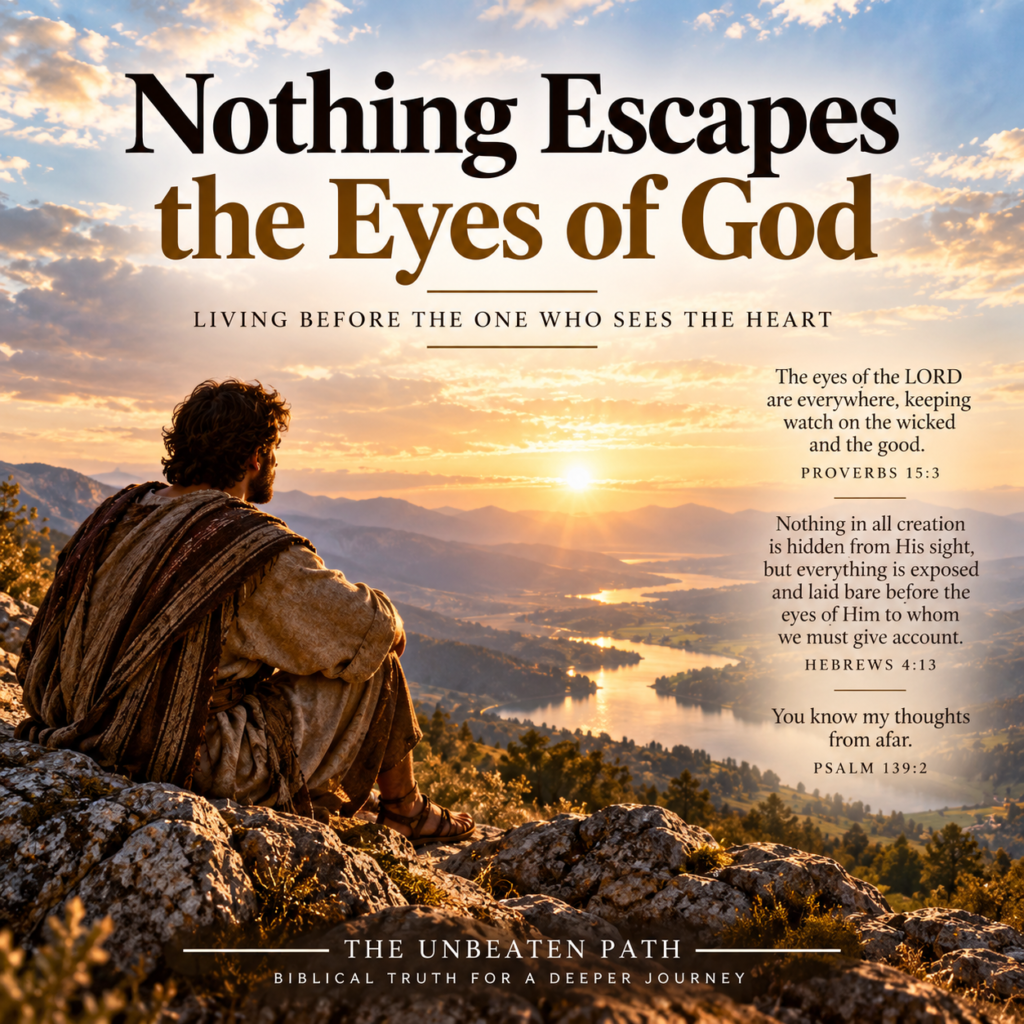
This is where human thinking is often too short. We judge God by today’s headlines, today’s bank accounts, today’s pain, and today’s apparent success. But God judges by eternity. The wicked may prosper for a season, but temporary success is not the same as eternal blessing. A person may gain the world and lose his soul. A corrupt man may live in luxury, but he cannot escape death, judgment, or the eyes of God.
In the same way, a righteous person may suffer now, but present suffering is not the final chapter. The Christian faith does not say that all wrongs are corrected immediately. It says that all wrongs will finally be judged by God. That is why the Bible can speak honestly about suffering without falling into despair. There is a coming justice beyond human courts, beyond public opinion, and beyond the temporary victories of evil people.
What Suffering Reveals
Another important truth is that suffering often reveals what comfort hides. When life is easy, people may think they are strong, independent, and self-sufficient. But suffering exposes the heart. It reveals what we truly trust. It can strip away pride, false security, shallow faith, and worldly illusions. This does not make suffering pleasant. Pain is still pain. But in God’s hands, suffering can become a refining fire.
Gold is purified through fire. A seed must fall into the ground and die before it bears fruit. A muscle grows through resistance. In the same way, faith often deepens through trials. Some people discover God most clearly not on the mountaintop, but in the valley. They learn that God is not merely the giver of blessings, but the sustainer of the soul.
The Greatest Answer Is a Person
The greatest answer to this question is not an argument, but a person: Jesus Christ.
The Cross and the Problem of Innocent Suffering
At the cross, the question “Why do bad things happen to good people?” reaches its highest point. Jesus was innocent, yet He suffered. He healed the sick, loved sinners, spoke truth, and obeyed the Father perfectly. Yet He was mocked, beaten, falsely accused, and crucified. If anyone could ask why bad things happen to good people, it was Jesus.
But the cross also reveals something astonishing. God did not remain distant from human suffering. He entered into it. He did not merely watch pain from heaven; He bore pain on earth. In Christ, God stepped into human injustice, betrayal, violence, shame, and death. The cross shows us that God understands suffering not as an observer, but as a sufferer.
And through the worst evil ever committed — the crucifixion of the Son of God — God brought the greatest good ever given: salvation.
Faith Does Not Deny Sorrow
This does not answer every detail of every tragedy. There are sufferings in life that remain mysterious. There are tears that no explanation can immediately dry. Christianity does not ask us to pretend that pain is simple. Even Jesus wept at the tomb of Lazarus. Faith is not the denial of sorrow. Faith is trusting God even when sorrow is real.
So why do bad things happen to good people? Because we live in a fallen world where sin, death, and brokenness still operate. Because human freedom has been misused. Because suffering is not always punishment. Because God sometimes allows trials that refine, awaken, and redirect the soul. And because this present life is not the final measure of God’s justice.
Why do good things happen to bad people? Because God is patient. He allows time for repentance. He sends rain on the just and the unjust. He may permit the wicked to prosper for a season, but temporary prosperity is not proof of divine approval. A man’s bank account is not the measure of his soul. His comfort today does not cancel his accountability tomorrow.
Can I Trust God When I Do Not Understand?
The real question, then, is not only “Why does God allow this?” The deeper question is: Can I trust God when I do not understand what He allows?
The Bible’s answer is yes — not because life is always fair now, but because God is just in the end. Not because suffering is good, but because God can bring good even out of suffering. Not because evil is unreal, but because evil does not have the final word. The final word belongs to God.
Suffering Does Not Have the Final Word
If God were not real, suffering would simply be meaningless pain in a meaningless universe. Injustice would have no final judge. Evil people who escape human punishment would truly escape. Death would be the end of every hope. But if God is real, then suffering is not meaningless, injustice is not final, and death is not ultimate.
The Christian hope is not that believers will never suffer. The Christian hope is that suffering will not win. Evil will not win. Death will not win. God will judge rightly, heal fully, restore completely, and wipe away every tear.
Until then, faith does not always explain everything. But faith holds on to the God who sees everything, knows everything, and will one day make everything right.
Related Ideas
God Can Redeem What He Does Not Prevent — God may not prevent every evil or suffering, yet what He permits does not escape His sovereignty. He can work redemptively through what He does not approve without calling the evil itself good.
Surrender — faith sometimes means trusting God without possessing a complete explanation for what He allows.
Faithfulness Before Success — present prosperity or suffering cannot by itself tell us whether a life is truly blessed before God.
The Soul’s Hunger for God — suffering can expose the limits of worldly security and reveal the soul’s deeper dependence on its Creator.
Connected Ideas
Suffering · Providence · Justice · Human Freedom · Redemption · Trust · Perseverance · Hope
Originally published on X on 2026-06-04. This website edition preserves the original essay while adding structural headings and knowledge links.